Order and Law

I wrote the first version of this essay about a month after the 2024 U.S. presidential election and updated it shortly after the 2025 presidential inauguration. It just took me forever to post it!

Order and Law

  • W. Yusef Doucet

Months have now passed since the U.S. voting public re-elected Donald Trump to the presidency of the United States by a slim margin, a plurality, not a majority. I am not a member of the Democratic Party nor the Republican Party. I do not vote for Democrats nor Republicans. Nonetheless, I preferred Harris had won the contest between these contending factions of the ruling interests, not because I expected a progressive vision or action from a Harris-Waltz administration, but as a defense against an empowered and further emboldened Trump and the anti-democratic forces with him and behind him, and for whom he serves as an embodiment and instrument. Many point out that a Harris victory would maintain the inertia of Democratic party intransigence on the most socially progressive policies popular with the Democratic party base, and I find that conclusion more than reasonable. At the same time, we do not approve of greater repression and worsening material conditions, nor do we celebrate the shrinking of the political space for resistance. People will be driven to action by the intensified repression that has now launched in 2025. We may be driven to action, any number of actions. As always, organized, politically educated action will make the difference. That would have remained the case under Harris, with the regular amount of repression.

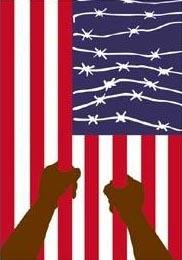
As Trump blaringly announces the regression we can expect in his second term, one of his promises continually pushes to the front of my thoughts. He promised to pardon all of the January 6 insurrectionists who had been convicted. That also meant that any active cases would be thrown out of court or the investigations ended. He did it. The convicted felon, 34 counts, will move back into the White House instead of serving time in a luxury prison or under house arrest at Mar-a-Lago. The self-declared party of law and order, a claim central to Republican policy and campaigns since the 1968 Nixon presidential campaign, and the Republican candidate who on brand campaigned stoking fears of out-of-control crime in the street and a lack of respect for police forces throughout the country poise themselves to sanction multiple crimes committed in open: threats of violence, political violence, destruction of public property, assault and battery on police officers, all committed on live television and live streamed around the world for hours. These are the same members of the U.S. Congress and the same president who will see Mumia Abu Jamal, Movement for Black Lives activists, so many more African and indigenous and Puerto Rican and Hawaiian and white working class activists, organizers, and revolutionaries remain in prison for the crime of daring to free others and themselves. 

As 2024 lurched to its close in the wake of the presidential election, the Daniel Penny verdict came down in a New York courtroom. A New York jury found Daniel Penny not guilty of murder, the murder of a Black man, an unhoused Black man, a Black man suffering a mental health crisis. Another jury in the United States acquitted a white man taking justice into his own hands by claiming the power monopolized by the state, the right to end a life. Being an annoyance is not a capital crime; threatening people on the subway is not a capital crime; being unhoused is not a capital crime; suffering mental illness is not a capital crime. Nonetheless, Daniel Penny summarily executed Jordan Neely really for those conditions. And when I heard the news of his acquittal, I felt a little more of myself die.

I felt a little more of myself die. I felt it in my gut, in a center-most place within my stomach. It felt like a quick stab from a long needle or ice pick. Here was one more reminder of how cheaply so many people hold Black life to be, how deeply ingrained fear of Black criminality resides in the thinking of U.S. juries such that they will see the Black victim as more culpable than the white perpetrator. Here was one more instance when the legal process justified the pre-judicial execution of a Black man. Here again was the system doing the work of grinding Black bodies through the gears of the machinery of oppression, and we who witnessed Jordan Neely’s life murdered and then murdered again by the not-guilty verdict feel the weight of the machine crushing us beneath its mass. Day by day through a myriad of these actions and inactions, the unremarked and the spectacular, the system tears life from our bodies, assaults our psyches, and keeps us in a continual crisis state.    

Consequent to the not guilty verdict, Daniel Penny appeared on reactionary media platforms who are promoting his acts as heroic. Then Vice President-Elect Vance invited Penny to sit in Trump’s box with the incoming president-elect, and several proposed members of the new cabinet for the Army-Navy football game. Daniel Penny acted out a fantasy deeply held by many white men in this country, the personal destruction of a Black body. This has always been a mark of heroism in the United States. Historically, the country has embraced killers of black and brown bodies, of African and Indigenous bodies. This case unquestionably echoes the acquittal of Bernard Getz for shooting Black teenagers on the subway in the mid-1980s because he felt threatened by their presence. The jury found his actions reasonable. The jury found George Zimmerman’s actions reasonable. The jury found Kyle Rittenhouse’s actions reasonable, which should have made clear that allies of Black people are subject to be treated like Black people. Daniel Penny was Jordan Neely’s executioner. U.S. social policy condemned him to death.

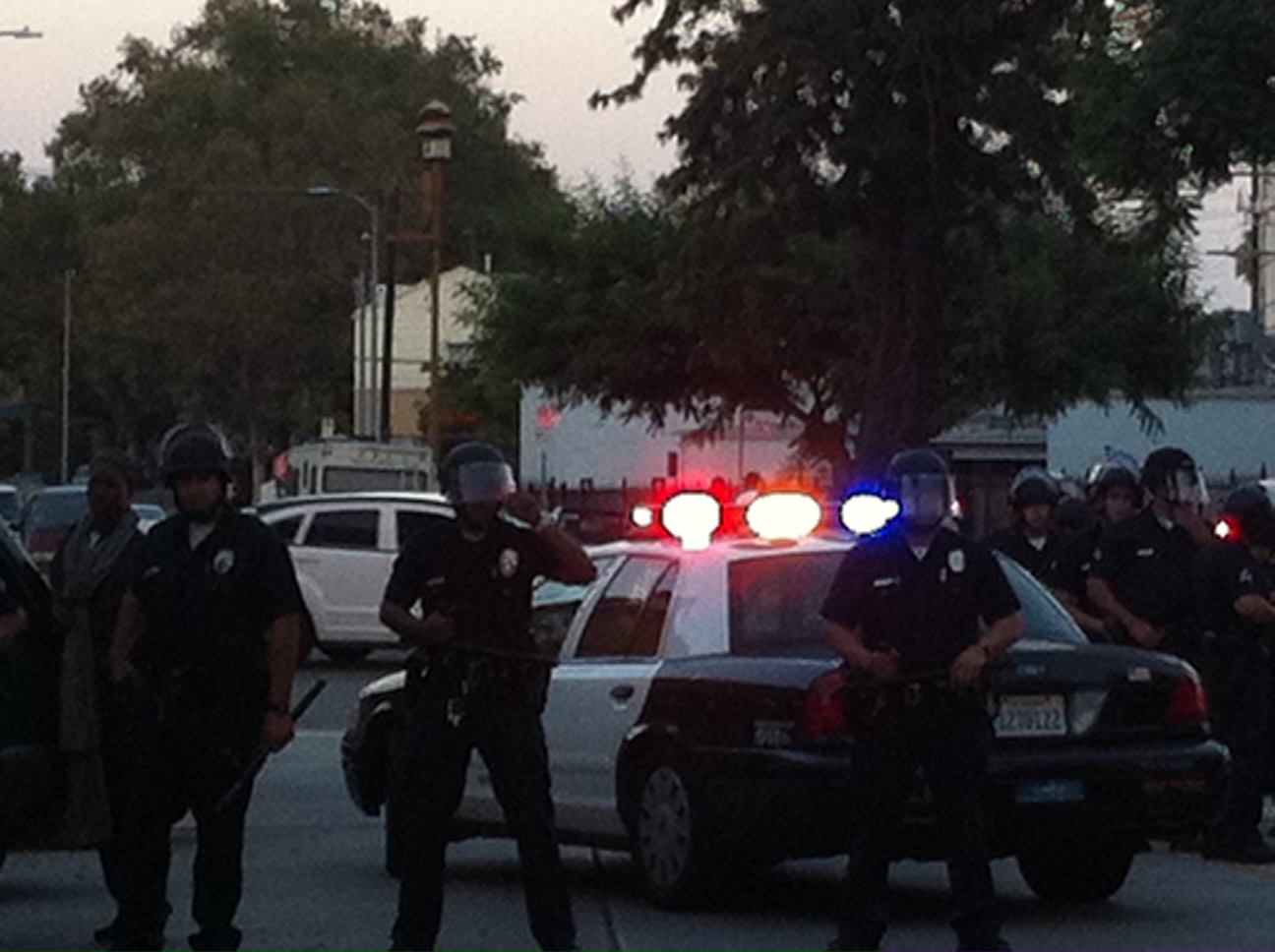
It never seems to matter that crime statistics have long indicated decreases in crime. Evidence shows that the spike in crime when there has been a spike in these last four years emerged as a result of the COVID-19 pandemic and the economic hardship consequent to the pandemic. Those statistical facts did not sway folks nor swayed an election that reveals an appetite for a return to the tough-on-crime status quo. What can that mean in this country when those whose mission is to administrate an orderly society openly and blatantly flout the laws that they themselves have created, be those laws the international laws and treaties or the local and federal laws broken and flouted by the outgoing presidential administration and incoming presidential administration and their backers?

The rulers have created the (dys)order of this life, and have rendered the law empty, even as they prepare to use the law to unleash the most coercive and repressive sectors of both the state and what generously, if inaccurately, we call civil society. The law is the codified opinions of the ruling class, the class that uses the legal structures to legalize itself. Law holds a privileged position in not only the social order but in the symbolic order. The law sets the limits of acceptable behavior, and even acceptable ideation, until ruling interests cross beyond the limit, and the lawmakers create a new limit. Where is the limit now, following 1500 pardons and commutations for January 6 insurrectionists, a re-election for the confessed sexual abuser and felon  inciter-in-chief, and the promise of human rights violation in the wind? We have moved into the open rule of billionaires. The sheets are off, exposing the familiar face of naked terror. The Trump regime makes plainly transparent the gangster character of the U.S. ruling class. They have destroyed the mirage of plausible deniability. The Trump regime aggressively reasserts the old social order of open white supremacy to correspond to the racialized and gendered hierarchies of their imaginations. The United States is an abuser on a global scale, and this once and once again president of the United States probably best embodies U.S. American depravity, brought to us by the ineffectualness and complicity of the political duopoly, and here to punish us all.  

The Rule of Racial Resentment

The Rule of Racial Resentment

W. Yusef Doucet

So now the President of the United States has decided that the 1964 Civil Rights Act harmed white people in the United States, and particularly white men, that because of the Civil Rights Act, some white folks “have been treated very badly” because they couldn’t go to college or get jobs. The facts of history do not matter. It does not matter that white applicants not accepted to their “dream school” still have multiple options, like all other students. It does not matter that white college enrollment still outpaces the rate of Black college enrollment [41 percent contrasted to 36 percent, perhaps still too close for white comfort] (National Center for Educational Statistics). It does not matter that as of the year 2000 CE, white workers constituted 71 percent of the U.S. work force, and still made up 60 percent of the work force in 2024 (Lin, Horowitz, & Fry). In that same period, the percentage of Black workers increased from 11 percent to 12 percent. What matters to the president is not the facts but how he feels, how he feels about the 2020 election, how he feels about the economy, and how he feels about social progress in the U.S. since the mid-1960s; he feels aggrieved and resentful.

Donald J. Trump was 18 years old when the Civil Rights Act of 1964 passed. Historians and journalists have confirmed the racist and discriminatory practices of Fred Trump, the father who raised Donald and shaped Donald, the father known to have had Klan ties and sympathies. Donald Trump grew up privileged and indulged, even if bullied by his father. The president’s personal history demonstrates that he embraced the lessons of racism. He is on video expressing, for example, his belief in the late 1970s that no one in the United States had it better than a Black person with a college degree, making this claim despite unceasing attacks on affirmative action and the fact of white male over representation in positions of power across the various sectors of public life in the U.S., particularly in governance and the economy. In the 2026 United States, white men hold 72 percent of U.S. Congressional seats, both houses, about 90 percent of state governorships, around 70 percent of judgeships, 79 percent of prosecutorial positions, a majority of mayoralties, at least 60 percent of college and university presidencies, 57 percent of CEO positions, and nearly 90 percent of movie studio presidencies. These percentages hold after decades of civil rights activism, affirmative action, equal opportunity programs, and diversity, equity, and inclusion efforts have made inroads for women generally and people of color, but will likely increase in favor of white men given the racial and gender policies of the Trump regime.

What we now endure under the second Trump regime is the weaponization of the racial and gender resentments that have fermented these 60 years since the passage of the Civil Rights Act of 1964 and the Voting Rights Act of 1965. This includes grievance and resentment over the reform of the immigration system that opened the doors to more non-white, non-European persons. This also includes grievance and resentment of the challenges to so-called traditional family life embodied in the Women’s Liberation Movement and the Gay Liberation Movement. Moreover, as these movements became more radical in the face of retrenchment, that resentment only grew. That weaponized white and especially white male grievance and resentment have become operationalized through all the coercive apparatus of the state.

These traditionalists want to call it conservatism.  What are they trying to conserve? The answer to that question is the same now as it was 62 years ago, white male supremacy. These resentments over perceived loss of power have animated U.S. conservatism since the mid-1960s. Right-wing activists and organizers have successfully appealed to these resentments among the white working class, exploiting the inability and unwillingness of U.S. liberals to commit to structural change in support of the U.S. working class. So, when analysts and commentators wonder why white workers have continued to vote against their economic and social interests since the last quarter of the Twentieth Century, one only needs to look to these resentments that have been cultivated for decades.  Now these resentments have resulted in President Donald Trump, again, who also deeply resents Black people, other people of color, women, and workers for having had the audacity to demand and expect equality, and even equity.

This is the Wally George ascendency, Wally George, the long time talk show host on KDOC in Orange County, California, on UHF Channel 56, a show broadcast throughout Southern California. Wally George’s combative, jingoistic, over the top ultra-nationalistic, American patriot bluster performed white grievance and resentment politics with gusto and bile. The nominal “Mr. America” invited “controversial” guests, that is guests who supported liberal, progressive, revolutionary, and/or counter culture values and policies, whom he would take every opportunity to berate. Hot Seat, the name of his show, and it was a show, politics as entertainment and spectacle, was no William F. Buckley Jr. polite, even if as vicious, Firing Line conservatism. [The irony that both of these talk shows aired primarily on public broadcast platforms underscores the hypocrisy of U.S. conservatism]. Both brands of U.S. conservatism propagated the U.S. right wing idea that some people did not deserve access to resources administered by the state. Hot Seat was deeply reactionary, showing an intense attachment to the U.S. American civic religion of anti-communism.

A public access, low budget set featuring an image of John Wayne, the space shuttle and the American flag, Wally George’s Hot Seat was wildly popular with the local, young, Reagan-era through the Clinton-era white Orange County and Coachella Valley population, particularly young men like those who populated his studio audience. That televangelist Reverend Robert Schuller of the Crystal Cathedral in Garden Grove hosted, presided over, and eulogized George at the talk show host’s funeral in 2003 indicates the breadth of his popularity with the conservative base in Orange County and parts of San Bernardino County.   Hot Seat  aired for 20 years! Multiple generations of young white men and women learned their political views from Wally. Wally George remains available to the world on YouTube. The Wally Georges of public access television and local radio, and all the various versions of Wally George have dominated local radio and often television air waves in suburban, exurban, and rural communities since the Civil Rights Act passed. Wally’s contemporaries Morton Downey Jr., Larry Elder, Rush Limbaugh, and Michael Savage, among so many others, cultivated intergenerational grievance and resentment with a greater reach than Wally. Add to that mediascape the plethora of conservative religious fundamentalist radio and television programming sharing the same messages of white grievance and resentment with a Christian patina. Now, the proliferation of digital and streaming media right wing podcasters well into this Twenty-First Century has institutionalized the resentment of the white working class and middle class and upper middle class and oligarchical class, and others, bringing us to this fascist moment in the United States.

A Wally George ascendency, and as I think of it, there’s even some similarity in the personas of Wally George and Donald Trump. Wally George wore signature gray slacks, a white dress shirt with an American flag tie, a blue blazer and a trademark platinum blonde wig parted on the side, a man of smaller stature than Trump. Despite their physical differences, both men evoke the cartoonish through their grooming style, a cartoonishness that obfuscates their very real danger. I don’t know what else to call Trump’s penchant for orange tanner and the bouffant hair. There’s also plenty in Donald J. Trump that evokes the crassness, the bitterness, the cruelty, the clown show, the spectacle of Wally George and Hot Seat. They also share a commitment to the myth of the U.S.’s ego-ideal , as well as the arrogance of their certainty that they could never be wrong just as the United States could never be wrong or do wrong, an article  of civic faith. Trump is dismantling what most U.S. reactionaries and conservatives have wanted to demolish for decades, and with patience have engineered since President Johnson signed the Civil Rights Act, and then the Voting Rights Act a year later. Indeed, this current Trump regime is going after what’s left of the New Deal, a conservative and reactionary dream since the 1930s.

I am not a fatalist. I do not think that the white working class is condemned to the toxin of white supremacy. The evidence of contemporary experience demonstrates to us the number of white citizens and residents of the U.S. who actively oppose the white supremacist practices of the current regime, at their own peril as has been tragically demonstrated in Minneapolis in this new year. This assault on the communities of color, symbolic, structural, and physical, continues what was signaled in the fall of 2024 after the election when the incoming White House crew celebrated Daniel Penny. Daniel Penny, a white man and military veteran, choked to death Jordan Neely, a poor, Black, unhoused man in the midst of a mental health crisis, in effect for being a nuisance, and then Penny received exoneration from a jury of his peers. I am convinced that many white men in this country celebrated vicariously through Daniel Penny and understood the permission granted when Trump invited Penny to join him, Vance and other members of what would become his cabinet in Trump’s box at the Army-Navy game. 

 Racial and gender grievance and resentment motivate the Trump regime, and they are willing, indeed feel they have a mandate from their resentment-fueled base -a genuine minority in this country- to war on the population of the United States in a massive project of ethnic and ideological cleansing, a massive project with a name, the Heritage Foundation’s Project 2025 and their follow up Project 2026. Some of us have known for eleven years now that “Make America Great Again” is nothing but code, barely hidden, for Make America White Again. That is to say, they want to make the United States something that it has never been, a white ethno-state. Falling short of that, they’re happy to make it what it was founded to be, a country where elite white men maintain the monopoly on power. That end lies at the heart of Projects 2025 and 2026. From that point of view, Trump’s point of view, the Civil Rights Act of 1964 and the Voting Rights Act of 1965 most certainly represent harm, the kind of harm the 99 percent of us need.

Work Cited

“College Enrollment Rates.” Annual Reports. http://www.nces.ed.gov

Lin, Luona, Juliana Menasce Horowitz, and Richard Fry. “Key Labor Force Trends.” http://www.pewresearch.org.
The PASLA Panel for the Joko Collective

Here is a conversation with veterans of the Performing Arts Society of Los Angeles (PASLA), a dynamic cultural formation based in South Central Los Angeles following the 1965 Watts Rebellion. Here are folks who lived the PASLA motto: “Social Growth Through The Performing Arts.”

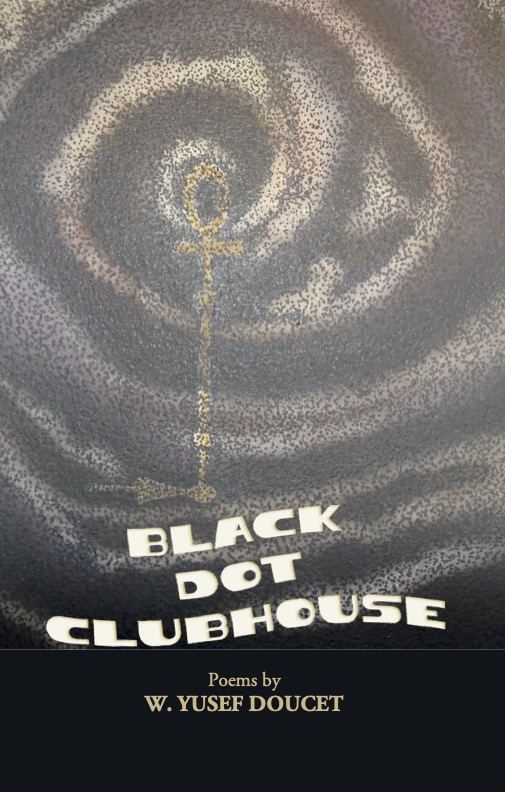
Black Dot Clubhouse drops November 6

https://worldstagepress.org/product/black-dot-clubhouse-by-w-yusef-doucet-pre-order/

It is my humble honor to announce the publication of my first collection of poems. These are pieces created during my youth: the years of my undergraduate education, the years of my graduate education, the years I became a husband and a father and a teacher. Several poems have been previously published; others have been regularly included pieces in my live reading sets; most have never been published nor read in public. Poems of the body, mind, and spirit, a window into a poet’s unfolding vision, Black Dot Clubhouse is one human voice speaking to our common human experiences: the large and the small, the public and the private, the sacred and the profane.  I invite you to join me in the Black Dot Clubhouse. (cover art by Madrid Rivera)

Echoes of Vincent Chen

Janice Mirikitani and Cecil Williams at Third World Liberation Front action

Echoes of Vincent Chin – W. Yusef Doucet

A massacre in Atlanta, and the United States turns its media eyes on the harassment and violence visited  upon Asian communities. The scope of murder in Atlanta made it impossible to continue to keep this particular expression of white nationalist violence muted in the public consciousness. Folks have organized demonstrations in cities around the country with minimal media coverage, in contrast to the coverage of the 2020 uprisings. Instead, we hear performances of anti-hate postures and statements, and I have seen a noticeable increase in Asian performers in commercial advertisements and public service media. It feels like a rather ghoulish disaster capitalism.  The danger is real for Asian communities and individuals, and it is an old danger, and a danger as pervasive and long-lasting as all the other peculiarly U.S. racisms against people who are non-white.

The city and state in which I live had several eruptions of anti-Asian violence throughout their history. In Downtown Los Angeles, in a place on Los Angeles Street not far from site of the Pueblo’s founding, at a place that was called Calle de los Negros, Negro Alley, nineteen Chinese workers were murdered by a mob. This was in 1871, a period in which anti-African violence intensified throughout the country, the U.S. government waged a war of extermination against the First Nations of the West, and the epidemic of lynching spread through every region of the U.S. These routine deployments of violence and terror, as well as antagonistic actions from state agents and civil society formations, have always been about the same thing, the assertion that the United States is a white country, and the Asian body is a foreign body, a body that threatens contamination. This applies to every region of Asia.  

I think about this, and I think about all the Asian people that have been part of my life. I remember Milky. I don’t remember her real name. We called her Milky, a Japanese girl, one of several in our kindergarten classroom at Thirty-Ninth Street School, now Tom Bradley Science Magnet, in Leimert Park, mostly African children, many Japanese children, and a few Mexican children, in 1967-1968. I think of William, a Chinese boy who I grew up with in our neighborhood, the neighborhood now called King Estates, on Van Ness Ave. William was just another homey in the ‘hood. As we got older, went to different high schools, we spent less time together, but we remained friendly for as long as we continued to cross paths, and until my family moved out of the neighborhood for the Athens neighborhood halfway through high school and those encounters became even more rare.  I think of Bob’s Market and the Filipino family that lived across the street from my grandparents on Bonnie Brae Avenue, one of the families closest to my mother’s family on the block, the camaraderie of my mother, my aunt and my uncles with the daughters and the son, my grandparents and the parents, and the welcome and the treats that my cousin I received when we visited Bob’s Market on the corner of Bonnie Brae and Temple, Bob, the father in the family. In think of Evelyn, their youngest daughter and our first babysitter, and of how much we loved her, and when she disappeared as a babysitter from our lives while adults spoke in hushed tones about her and left our questions unanswered, and of how much my family cried at her funeral after a battle with something they called leukemia.

I think of these dear ones fondly, and so many others really, relationships that we formed before I was ten years old. This continued through junior high school and high school.  Asian folks lived, schooled, and worked next to us. Asian folks shared an experience of white violence and racism, exploitation, and alienation. We identified around those experiences, those histories. Sometimes some Black kids, bullies and bangers, picked on the Asian kids. Sometimes some Asian kids, bullies and bangers, picked on Black kids. Yet mostly and every day, we all got along. We all identified with Bruce Lee. We all idolized Kareem Abdul-Jabbar. We loved that Bruce and Kareem Abdul-Jabbar were friends.  Some of us even knew about Asian members of the Black Panther Party. Plus we all knew Black folks with an Asian parent. 

I didn’t know any of the victims in Atlanta. I don’t know who among my Asian friends, colleagues, and students have faced recent harassment. I assume all of them have because I don’t know of a time when anti-Asian racism hasn’t been a routine aspect of life in the U.S. So militant white nationalism has muscled up in the last year, fueled by a blustering demagogue of blistering effect.  Last year, these folks drove trucks into demonstrators. Deeply frightened and deeply entitled people have begun to unleash pent-up resentments that have stewed since the last quarter of the Twentieth Century, cultivated by cynical politicians and by a profitable and quite mainstream propaganda industry with religious conviction, and handed down to the generations that were to be end of racism. Still it lingers. Still it poisons. Still it kills. Still, it fills bank accounts.

I could not help but think of Vincent Chin. I didn’t know him either. But He remains a touchstone for me, this Chinese American man who two white men decided deserved execution because they would not be replaced, would not have their jobs replaced by the Japanese.  In that moment, any Asian would do. They were all Japanese, and this was just another American atrocity. Vincent Chin received nothing like justice. His killers received three-years-probation and a fine for $3000 each, and eventual acquittal from federal charges.     Within two years of his homicide, Ronald Reagan’s re-election campaign declared that it was “morning in America again.”  It’s still morning in America, a red, hellscape morning. Black lives matter. Asian lives matter. The people remain in the street. Today, once again, people say his name, Vincent Chin.  We know our departed loved ones hear us. This is something Africans and Asians share. I hear Vincent Chin, crying, and bitterly laughing, mourning in America.

Liberation Cinema!

The Brothers’ Quarterly Presents:

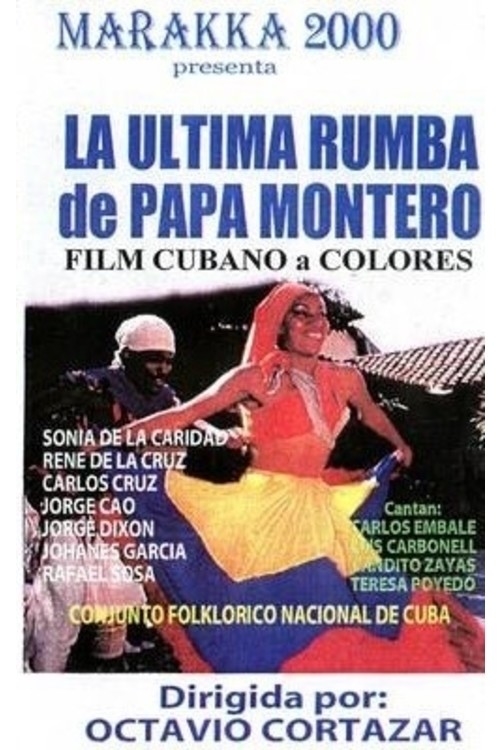
PapaMontero

“Octavio Cortazar’s docu-drama La Ultima Rumba de Papa Montero (The Last Rumba of Papa Montero) uses rumba beats and Afro-Cuban lore to tell the story of one of Cuba’s great rumberos. As with any nation obsessed with dance, Cuba comes alive here with every stomp of the foot. Even in death, Papa Montero is resilient—buried in a local cemetery he’s now become “a dead man who won’t go to heaven.”” – Ed Gonzalez
Friday, July 5, 2019
AFIBA Center
Doors Open at 6:30 PM; program begins at 7:00 PM
Free: donations accepted
5730 Crenshaw Blvd., Los Angeles
Off-street parking available