Of the Obamas and Black Anger

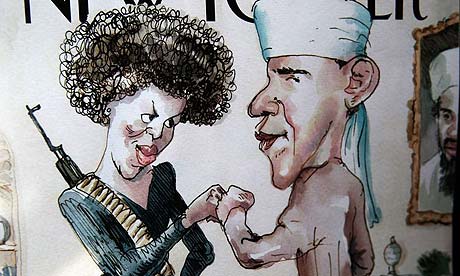
Daps (terrorist fist bump? really?  Are we really that foreign?)
Daps (terrorist fist bump? really? Are we really that foreign?)

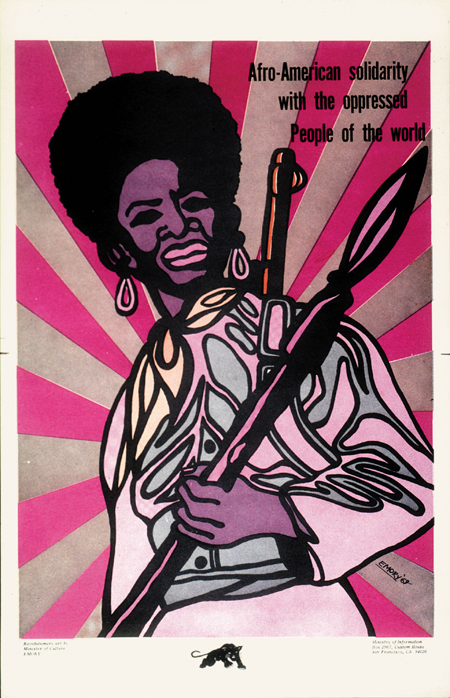
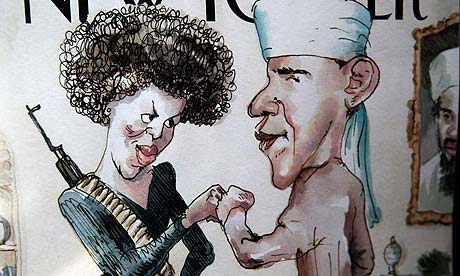
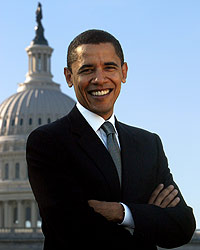
The discussion of the New Yorker cover featuring Senator Barack Obama dressed as a Muslim of Southwest Asia or East Africa and Michelle Obama dressed as a Black Liberation Fighter with full Afro and AK47 has taken primarily two tracts: the inability to appreciate the satirical intent of the cartoon exactly to condemn the politics of fear, or the bad taste, insensitivity and poor judgment of the New Yorker for publishing the drawing. Both tracts center their discussions, understandably, on the possible impacts on the presidential campaign. Lost, or at least submerged, in the discussion is the Michelle Obama part of the equation of the fear politics, U.S. fear of Black radicalism, U.S. fear of black anger, and thus the persistence of racism. She had the gall to admit that she has not always been proud of her country’s behavior. Imagine that.

imagine that
imagine that
imagine that
imagine that

imagine that

Imagine that.

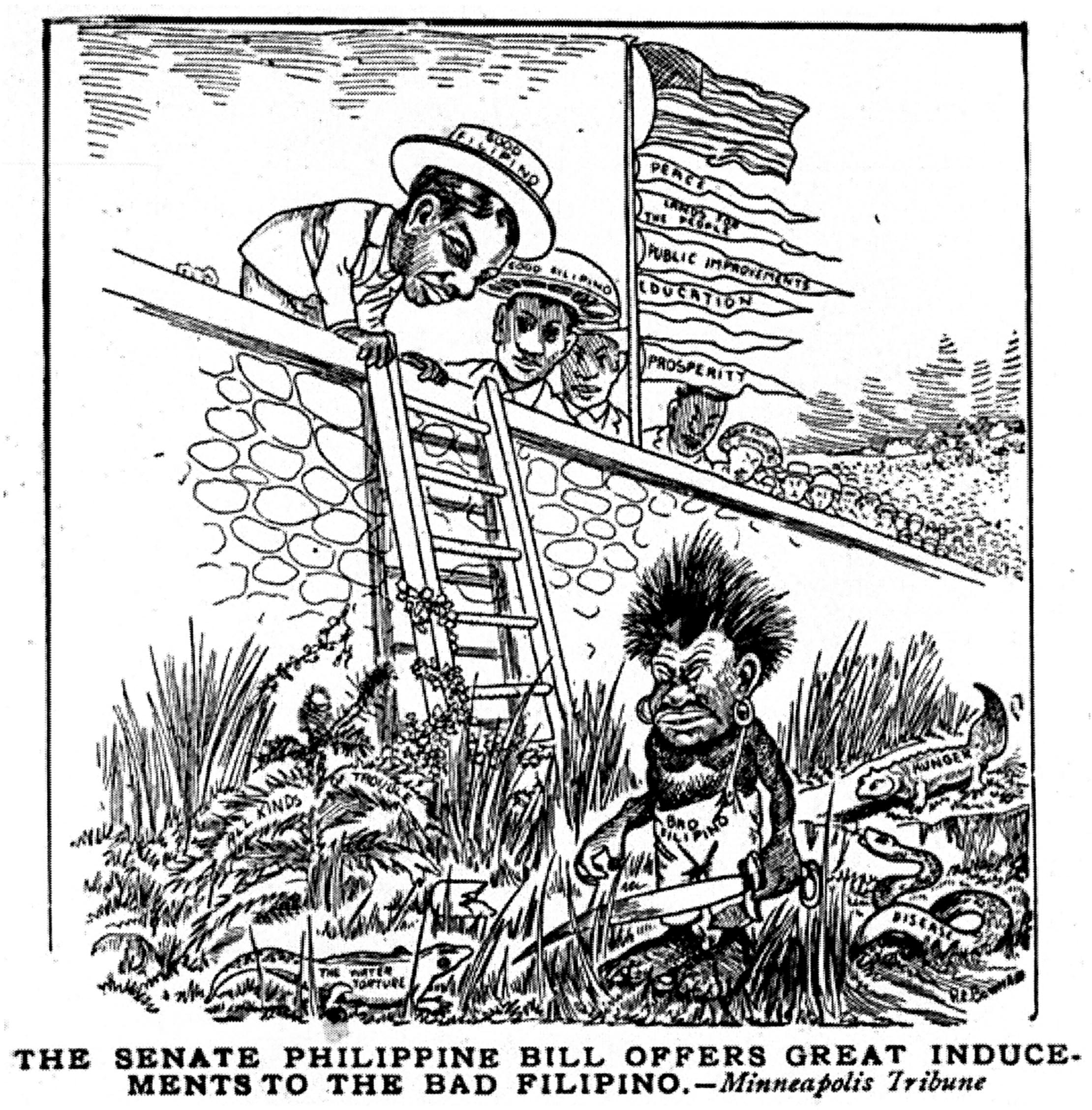
The political right represents Black anger as unjustified, irresponsible, and a security risk. The political center and the center-left represent Black anger as perhaps justified for class reasons, but irresponsible, and a political risk as it mobilizes reactionary action from the White working and middle classes who should be in solidarity with the Black working and middle classes. That narrow political spectrum casts persistent Black disenfranchisement, poverty, alienation as essentially behavioral problems. If Black people stop acting the way they do, they too can succeed, a usefully vague notion. So the race that Americans want to take them beyond race turns on race and U.S. inability or unwillingness to address racism, the real “race” problem.

familiiar and comfortable; believable?
familiar and comfortable; believable?

Now, during the week of the Democratic National Convention, Michelle Obama’s keynote speech Monday night played the familiar notes of American Exceptionalism, the narrative of uniquely American working class and middle class possibilities for upward mobility and wealth if one works hard enough and sacrifices enough. Michelle Obama emphasized, for example, how her story and her husband’s story are so similar: her raised working class on the Southside of Chicago, and him raised by a single mother, perhaps the only single mother in recent history who Americans have been asked to feel for, and her parents, working class white people. The message was clear: we are really all the same; we Black people are just like you White people.

familiar
familiar

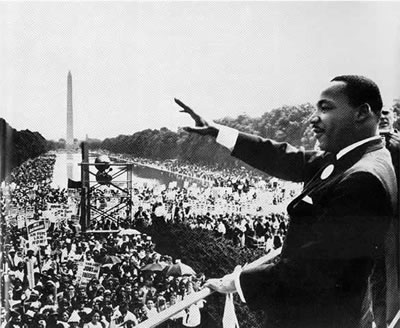
Revealingly, the mainstream media picked up this sameness theme and framed it as a necessary humanizing of Michelle Obama, that indeed, she had to demonstrate to the American people, which really means most of the 80 percent white electorate, that she and her husband and their daughters are just like other Americans, that they love each other, work hard, believe in God, love their country, are Americans. Consider this: 8 out of every 10 voters in the U.S. are white. A significant number of these 8 voters need to be shown that Black people are human like them. That is what it means to humanize people, isn’t it, to make them more human in some one else’s eyes? How were they perceived before they were humanized? How do Whites really see Blacks if in the week when Barack Obama gave his acceptance speech on the anniversary of Dr. King’s speech at the March on Washington, his wife still needed to be humanized, and this is taken as necessary and serious politics?

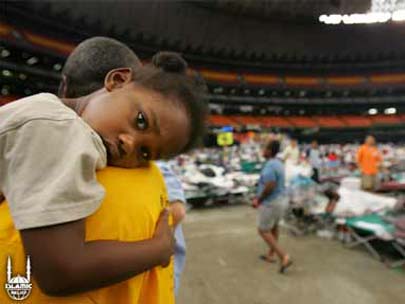
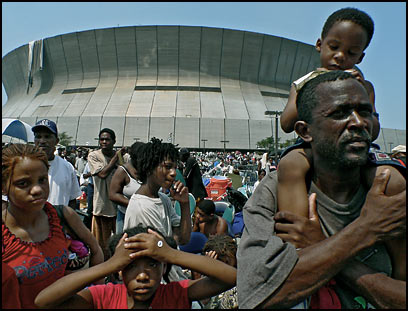
imagine this
imagine this

What We Choose to Remember, Part Two

But we are Americans. Malcolm understood that, what that means culturally, the way in which African Americans have created, developed, forged, cultivated, scratched out – which metaphor?- an identified and indentifying culture only possible under these unique conditions of U.S. political and social history. We live with the doubleness. It marks us. It marks our modernity. Henry Louis Gates and others remind us of the creole character of our culture, often as a critique of the Afrocentric, the essentialist. But creole-ness has not weakened the magnetic pull of Africa, and American-ness continues to complicate how one lives with the pull. We live doubled.

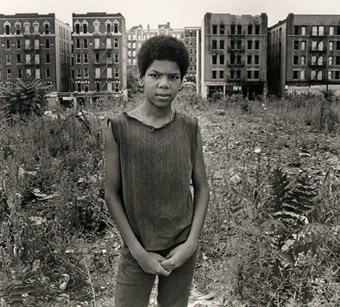
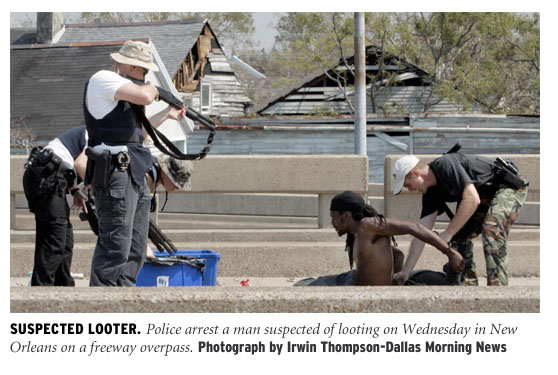
This is an American.
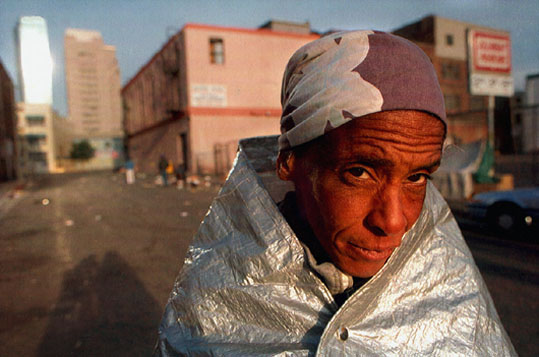
This is an American Maroon. Maroon, from cimaron, meaning wild and unruly, runaways.
This is an American Maroon. Maroon, from cimarron, meaning wild and unruly, runaways, stray cattle.
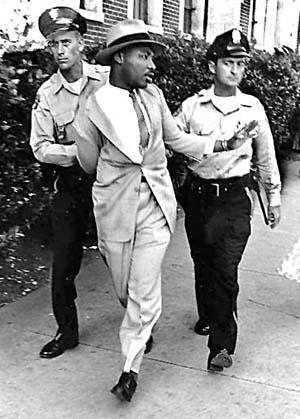
This not the South( thank you JVDZ).this is not the South either (Thank you JVDZ).
this is not the SouthThis is not the South either.

So what did Malcolm mean?

What We Choose to Remember

Josh Howard of the NBA’s Dallas Mavericks has been in the news this week for disrespecting the national anthem over summer. The clip has been bouncing around YouTube.

Howard has been roundly criticized and denounced, reminded that he owes so much to this country, a country that has allowed him to earn millions of dollars at his profession. But many African Americans agree with Howard. African American citizenship is still problematic, unsettled, in question. Howard’s comments emerge from a discourse of opposition that has been a central theme of African American resistance and counter memory. Expressions of Black anger, of Black critique of the mainstream narrative of the U. S. troubles the plantation,the quarters and the big house. Americans, black and white, don’t like to remember.

Michel-Rolph Trouillot, discussing Bourdieu’s concept of the unthinkable explains, “The unthinkable is that which one cannot conceive within the range of possible alternatives, that which perverts all answers because it defies the terms under which the questions were phrased”. He goes on to explain that this exactly describes the Haitian Revolution and the ongoing silences about that revolution. It is a silence that continually muffles discourses of black Resistance, erased from mainstream discourse and often relegated to legend or “mere rhetoric” in black communities.

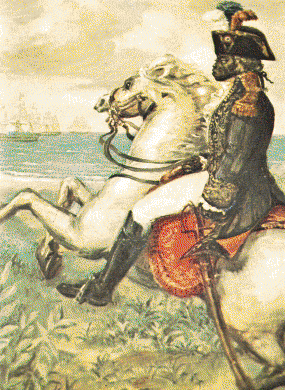
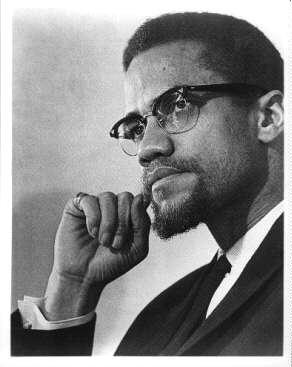
Toussaint L’Ouverture, Jean Jacques Dessalines, Henri Christophe, these men and the men and women they led saw themselves as rising to their historic roles in a revolutionary period, actors in the Caribbean phase of the French Revolution. Revolutionary France was ultimately unable to come to terms with African freedom in the Caribbean and under Napoleon attempted to reinstate slavery. The Haitian defeat of France, and England, and Spain in their attempts to fill the vacuum left by the French, shook the slave-ocracy of the young American republic. But the U.S. had its own problems, its own history of uprisings, its own grumbling slaves and natives. Theirs are the silenced narratives. They make Americans uncomfortable. They should. Josh Howard is a reminder, including his comments about the Obama campaign. How will Obama’s campaign and possible presidency be used to regulate African American dissent from the mainstream? Not everyone is drinking the kool-aid. “No, I’m not an American. I’m one of the 22 million black people who are the victims of Americanism…I’m speaking as a victim of this American system…And I see America through the eyes of the victim. I don’t see any American Dream; I see an Amercan nightmare.” from The Ballot or the Bullet, delivered April 3, 1964 in Cleveland, Ohio.

The suit

Last night, 9/20/08, I performed a poem that is not a poem.  I wrote it down, typed it up, printed and read it.  It is really the script for a piece on the business suit. The performance entailed me undressing and completing the performance in my underwear and painting my forehead and chest  red, black and green.  No one knew what I was up to.  Afterwards, several people asked if I would be repeating the performance.  My initial response is no.  The piece was conceived as a one time performance that can’t be repeated.  For one thing, the surprise value is gone.  But beyond that, the piece is a kind of declaration of independence.  how many times does one need to declare independence? How many times does one need to openly reject hegemonic culture?

no shame
no shame

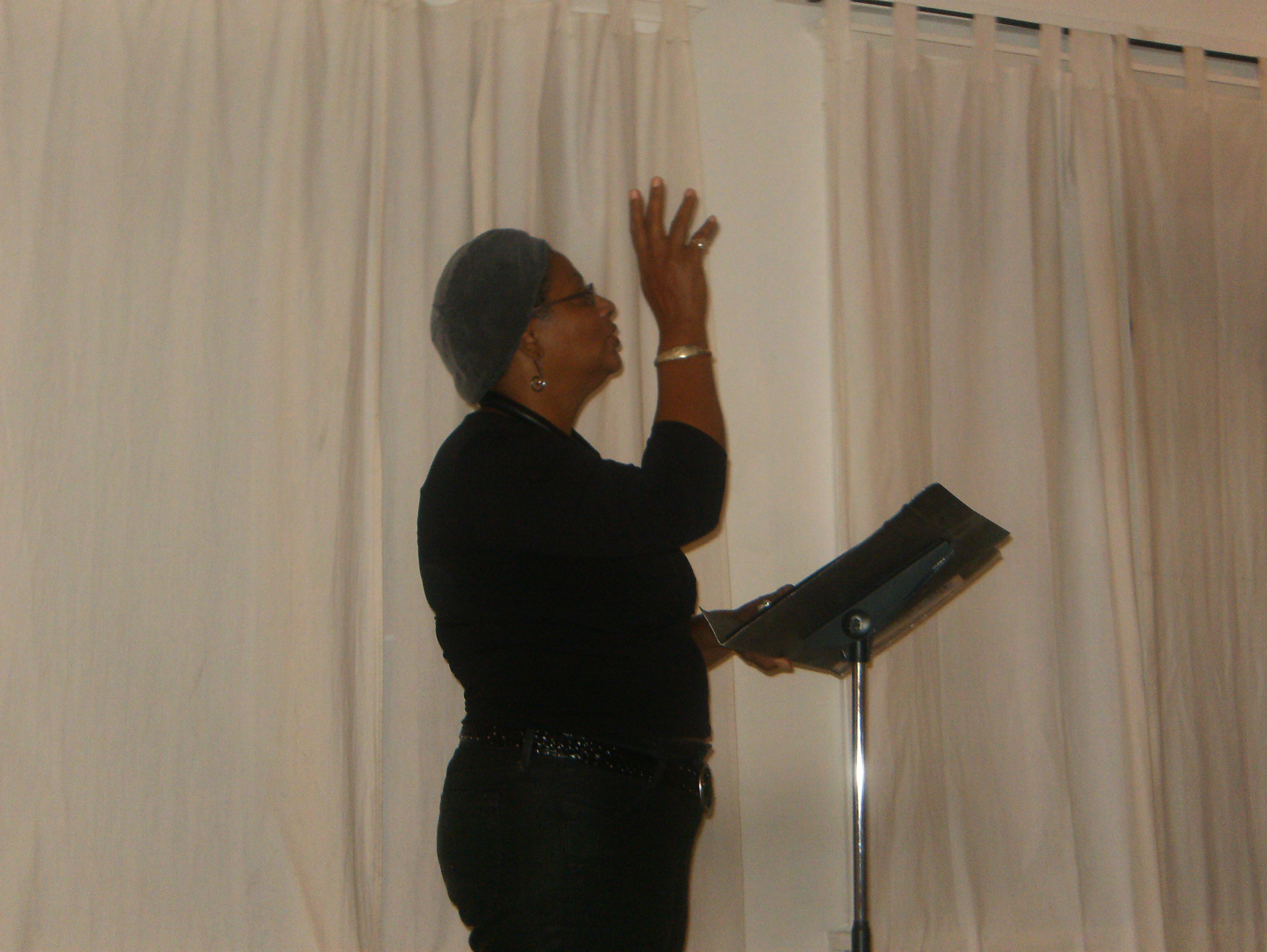
 That women on the floor to my left opening the water bottle is Jolia Allen.  She was one of the featured poets.  Below is DJ Watson , our final featured poet.

casting spells
casting spells

The event was an art opening curated by and featuring Mildred Rivera. Mildred, Madrid, is a Nuyorican artist who has been in Los Angeles for several years now.  This was the first time she had poetry as part of the opening.  The photographers were logocentric, forgetting to document the art, except perhaps incidentally. Then again, as the mc and opening poet, my stripping firmly focused the cameras on the poets.  I continued to mc in my shorts until the reading was concluded.

mildred and flag
mildred and flag

Mildred reading her 9/11 poem in front of an image of the U.S. flag.  The flag features a question mark and fingerprints superimposed over the stripes.  I’ve got to get a better image of it. 

Here is the poem I read.  Beginning with the tie, each article of clothing mention I remove.

The Suit


As you see, tonight I’m wearing the uniform.

The uniform, for all occasions

Weddings, funerals, graduations, induction ceremonies

The business suit, appropriately serious, somber, sober


A demilitarized officer’s dress blues

A remnant of 19th century rationalization of dress

The decorative buttons, a handkerchief

Where medals should hang

And no more epaulettes

Perfect soldiers without commissions


One night I was watching the Africa Channel

And this brother was being interviewed in his office

About the business climate in South Africa

It struck as ridiculous that this brother

Should have to dress in western suit

In order to be professional

That the premier of China wears a western suit


We wear our suits in the tropics and the deserts

And the air conditioned suites choking the planet

Honorary Europeans, bourgeois apes

And working class mimics


The tie, what is its use?

Merely a decorative noose

The shoes that do not breathe

These were a snake. Though they fascinate me

I don’t like snakes, but I wouldn’t

Wish this on them.  Is this how Eve’s children

Were meant to crush the serpent’s head?


This suit, is this the sign I’m civilized,

I’m modernized, this jacket, double breasted

For what? These pants? The shirt? Piece work

Stitched by Thai fingers

Sometimes I can taste the sweat


I don’t want to be modern anymore

It’s tiring and ridiculous

And harbors its own barbarisms

I don’t want to be an honorary Westerner


Call me romantic if you want

Call me essentialist and dismiss me

Call me post modern pre modern

In boxer shorts and spectacles

Even the post modern pre modern

Has sense of modesty and the practical


I will paint me in this sign

Of my black modernity (red black green)

I will wear this emblem

Of African antiquity (ankh)


I shall call me:


Tableau: the being-ness of simultaneous blacknesses


Now, I will read a poem