These are scenes from the second day of protests from one pocket of protests in Los Angeles the day following the Zimmerman verdict.
What is left to say? Now a month since a jury of his peers acquitted George Zimmerman, what is there left to say? Some of us have assailed the failure of the justice system, the lackluster performance of the prosecution, the cynicism of the defense, the complicity of the judge in her pre-trial and pre-deliberation instructions to disregard the issue of race and racial profiling, the apparent inability of the jury to empathize with Trayvon’s suffering and his parents’ pain rather than Zimmerman’s predicament and his family’s anxiety. These targets deserve our missiles, but they were only doing what the system conditions them to do, protect white power and protect white property, including the property whiteness. The mainstream responses to the verdict were predictable: calls for “peace,” calls to respect the verdict, appeals to the underlying fairness of the U.S. judicial system, rote denials of racism, praise for Trayvon’s parents for their “quiet dignity” and calls for prayer, the barely contained triumphalism of white folks, spewing forth on social media and cable news, and comments from the black POTUS and his operatives in civil society designed to de-mobilize the righteous anger of Black folks and their allies. But we shouldn’t expect justice from a system wired to exploit and oppress. We shouldn’t squander the moment by simply pursuing a federal and/or civil rights case. What do we mean when we have been correctly in the streets demanding justice for Trayvon? What is Justice for Trayvon, for Aiyana Stanley Jones, and for the all the other Black folks killed extra-judicially, one every 28 hours? And how do we create that for ourselves so that we can stop hurting?
Even though the other jurors have challenged the characterizations of their deliberations as represented by Juror B37 to CNN’s Anderson Cooper, they nonetheless perpetuated the denial of the right of Black people to life. That’s what that verdict and the stand-your-ground-law that was never directly introduced in the trial but haunted its every performance finally mean: Black people cannot expect their right to life to be recognized or respected. It is a version of the Taney decision in the Dred Scott Case: Black people have no rights that any white persons need to respect, including the right to life or self-defense. Trayvon could be pursued and confronted, and when he resorted to defend himself, unarmed, he can be shot and in effect found guilty of aggravated assault. And we knew that we were all found guilty again, guilty of making white people anxious, agitated by our presence, a presence they both abhor and demand. We remain stuck in someone else’s racialized psycho-drama, one that casts us as the stain that must always be removed but that must also always be present as the negation against which whiteness finds meaning. We need to pull ourselves out of that phantasm.
As to the fairness of the trial, it was plenty fair, that is, plenty white. Zimmerman was tried by a jury of his peers, his white peers, 5 to 1, and his class peers or peer-wannabes. And the defense presented raised reasonable doubt in the jurors’ minds. But reasonable doubt means different things to different communities. Reasonable doubt can’t be abstracted from direct experience or pre-existing attitudes and expectations. It does not operate in a vacuum.
That’s why Zimmerman was armed. That’s why thirty-three states have instituted stand-your-ground laws. That’s why white people have been buying guns in record numbers since the election of Obama, a major feat considering how well-armed the white U.S has been since there has been a U.S. Fear of black people is always reasonable to most white people, and others, in a system of white supremacy. Fear animates U.S. politics and culture. The jury arrived at the verdict demanded by precepts of racism white supremacy, the a priori guilt of Black people, and subsequent “necessary” behavior of white people to do what is fair for them if not justice for Black people, and others, the defense of whiteness.
LAPD rolled four deep in their squad cars for days. Heightened surveillance has been in effect in the ‘hood since the verdict: bicycle cops, the ever present helicopter, they even broke out the horseback cops. None of this is new. LAPD has always acted as an occupying force in African and Chicano-Mexicano-Latino neighborhoods. Citywide tactical alert for days, primarily visible in South L.A., I certainly didn’t see a heavy police presence on the Westside, despite the citywide alert. The Zimmerman trial and verdict has confirmed that the system does indeed work, the global system of white supremacy. Things are cooler on the streets now. But we ain’t finished! We had better not be finished, because they certainly aren’t finished with us, pushing us into irrelevance, the grave and prison.
The retirement of the space shuttle USS Endeavor provides a rich opportunity to examine the role spectacle continues to play in the political culture of the postmodern imperial state. The citizen-subjects of the United States enjoyed the opportunity to gaze upon the Sovereign embodied in the technology of the space shuttle program. The vehicle that provided the means for the empire to break the barrier of the atmosphere and return multiple trips has always meant more to the image that the U.S. state has wanted to project to the U.S. public and the world than merely its scientific value. In mid-October, it began its new old semiotic life. The spectacle of the shuttle being carried across country on the back of a jumbo jet allowed the citizen-subjects to gaze upon the body of the Sovereign-Republic reconfigured in the display of power in its aspect as technology; it also allowed them to experience an imagined real transfixing moment. The Sovereign-Republic, twice embodied in the space shuttle and the plane big enough to carry it, doubles itself again in the joining of its two aspects, State and Civil Society, characterized by the political economy of government military spending on contracts with private industry. And the national and local media happily played their role as imperial criers, readying the population for the display of the Sovereign’s train.
The sight of the Endeavor riding piggy-back on a jumbo jet should have delivered a sufficient display of power, but it turns out that for Los Angeles, piggy-back space technology only provided prologue to the main event. That was like the cartoon movie houses used to show before the double feature back in the days before the multiplex. In my neighborhood, we had a close up view of the spectacle. In fact, we joined in the spectacle, although joining in might not be exactly accurate. The engineers pulled the Endeavor from Los Angeles International Airport to the California Science Center at Exposition Park. That journey goes right through Inglewood and Southwest Los Angeles, among L.A.’s Blackest and Brownest neighborhoods, and also neighborhoods where barely working class, working class and lower middle class families live near some of the most affluent neighborhoods just up the hill or across the freeway. This symbol of the Sovereign’s power took a two day journey through the midst of the U.S.’s historically repressed and exploited internal colonies, U.S. and immigrant Africans, First Nations and Chicano-Mexicanas, Central Americans and Puerto Ricans, Pacific Islanders, East Asians and South Asians. People came out in droves to see the shuttle, and upon seeing the crowds, maybe to see each other.
Still, I question whether we joined in anything because most of us did very little. That is, the event, and it was an event, required minimal participation. The event required us to come forth and view. That is the meaning of spectacle, a thing to be seen, and that’s what most of us did, look, try to get a close-up, snap photos, post to Facebook or Instagram. So despite the carnival atmosphere, the sense of celebration, there was no celebrating really happening beyond the official performances and speeches from politicians and community…leaders? Those too were to be seen. That aligns quite well with late modern popular culture in the U.S. So much of it requires watching: watching movies, watching parades, watching the game, watching TV, watching computer screens, watching smartphone screens, watching celebrities, watching our words, but not watching the watchers. We waited, and we simply watched the shuttle sit on its raised, be-wheeled platform, or watched it get pulled ponderously, achingly slowly down the Inglewood and L.A. streets, being maneuvered to avoid telephone and lamp posts. Many trees gave their lives for Endeavor even before the journey began, a little less shade in the ‘hood.
The Endeavor made an extended stop at the intersection of Martin Luther King, Jr. Boulevard and Crenshaw Boulevard, in the heart of the last U.S. African majority neighborhood within the city limits of Los Angeles. King runs east and west and marks the southern border of Exposition Park. Besides the California Science Center and Aerospace Museum, Exposition Park also “houses” the L.A. County Museum of Natural History, the Rose Garden, the California Afro-American Museum, the Los Angeles Sports Arena, the Olympic Pool and the Los Angeles Memorial Coliseum. Pointing east on King, the Endeavor was positioned for its final expedition, from Crenshaw to Exposition Park. Befitting a city known for its entertainment industry, the Endeavor sat on its platform in the intersection flooded with lights, underscoring the (anti) drama of the moment and lending a bit more of unreality to the scene, as it felt like a movie set. That night, as I joined the crowd to get a close up view of the thing that had blocked traffic in the neighborhood all day and had been attracting thousands since ten that morning, hours before its arrival in the early evening, I heard a sister on a cell phone behind me. “There it is,” she said, “right in front of me. Well, I’ve seen everything now. I guess I can move out of the neighborhood.”
When Exposition Park, Inglewood and Southwest L.A. were first designed and built, they were white neighborhoods. That the display of the Sovereign wound its way through Black and Brown neighborhoods occurred as a result of history, shifting demographics, and white flight. Nonetheless, the spectacle offered the local residents their chance to share in the delusion of inclusion as many of the country’s most marginalized people chanted, “U.S.A.,” for the local news crews. For the weekend of October 12 through October 14, they occupied the patriotic center of attention, certainly in the region if not elsewhere. Very much the way the spectacle of a black president has given permission to many otherwise disaffected people of color to express openly long held desires to feel a part of the project of the United States, the people most often found newsworthy for pathology, embraced their roles as the faces of U.S. patriotism.
Now, Toyota has launched an ad campaign for the Tundra, highlighting the truck for pulling the tonnage of the Endeavor. In fact, Toyota’s advertising campaign is what has got me thinking about the Endeavor again. The fact of a Japanese auto company capitalizing on a U.S. American patriotic display, and Time Warner Cable using their participation in clearing the Endeavor’s path as a public relations move, points us in the right direction: behind the sentimentality associated with this display of U.S. technological achievement, the Endeavor tells a story of the profit motive and military advantage, obscured themes of the United States’ story of itself. The tales of brave astronaut-scientists routinely tempting death and defying the confines of the atmosphere in the pursuit of knowledge situate the U.S space program in a fictional space outside politics in the mainstream discussion. The actual losses of life with the Challenger and the Columbia have demonstrated the real danger associated with human space travel and have only enhanced the seeming apolitical character of the space program. But like all military contracting and aerospace projects, questions of jobs, resource use, spending priorities, disbursements, and budgets always carry political implications.
The relationships between the technology present in the space shuttles and the procurement of the “strategic minerals” necessary to produce and maintain the now grounded shuttle fleet and other U.S. military technology remains primarily obscured. But when we gazed upon the shuttle, we gazed upon the empire’s resolve to maintain control of those “strategic minerals,” minerals primarily found in the Global South, the ancestral homes of the people of color who lined the streets to see the body of the Sovereign, pulled down the street by a Toyota Tundra. I am going to guess that few of us thought of the Endeavor as implicated in mineral wars in Congo or Western Asia, or ruinous mineral extraction in South America or the Caribbean Basin. I’m going to guess that most of us did not think of rocket testing in the Pacific. I’m going to guess that few of us drew a connection between our under-funded public schools, libraries and medical centers and the government contracts awarded for shuttle construction, even as the shuttle program promised to enhance and inspire research in these areas. Science is not free of the stains of imperialism and capitalism.
So now, the Endeavor sits in its new home, covered by a large tent in order to protect the State’s investment from weather and vandals. It represents a tourism coup for Los Angeles County, one more destination for school field trips and visitors to our lovely city. That means revenue, and revenue matters, which is why Toyota and Time Warner have seized the opportunity to use the Endeavor to sell Tundras and telecommunication services. But more than the money, or at least as importantly as the money because of its implications for the continued flow of the money, the cultural meaning of the Endeavor also matters, matters very much. The cultural value of the Endeavor’s display, which is to say its ideological value, must be measured in its ability to intimidate, to awe and to pacify the public at large, especially the colonized public. It must be measured in its ability to foster a sense of credibility and inevitability for the Sovereign’s reign. Come to think of it, I’m not sure that the Endeavor has retired at all.
In Los Angeles, I assume like every big city, we have in the African and Latino neighborhoods a network of independent movie distributors: “Got those DVDs, Blue-rays, what you need?” And in Los Angeles, a unionized industry town, that’s tricky. Many families region wide are directly and indirectly tied to the entertainment industry. The underground trade in DVDs, including pirated and bootlegged films, does have an economic impact. However, many of the brothers and sisters distributing films at the bus stops, subway stations, and supermarket parking lots won’t be employed by the legal economy. Many have been marked as unemployable by the mainstream and rely on the underground economy to pay the cost of living. Furthermore, Hollywood, that is the entertainment industry, continues to be the principal purveyor of white supremacist imagery and narrative through all media. The entertainment industry is the propaganda wing of the empire and routinely engages in the ideological reproduction of whiteness and the claimed privileges that accrue to that condition. Much of what the brothers and sisters distribute is the same stultifying propaganda and cooning Hollywood mass produces as a matter of course. Here, I would like to recommend some other films for these comrades to peddle from gym bags or car trunks, films that reproduce the Black world, films for liberation.
In Sucre amer, first released in 1998, Christian Lara of Guadeloupe uses a trial to raise the question as to the right of enslaved persons to defend their personhood and their liberty, specifically, as agents for revolutionary change. Although ostensibly an appeal trial to clear the name of Major Joseph Ignace (actor Jean-Michel Martial), a Guadeloupean commander in the French army who after fighting royalists in the island on behalf of the French Republic, found himself and his armies in rebellion against Napoleon’s army sent to re-institute slavery in Haiti and Guadeloupe, the trial actually serves to reveal the hypocrisy of Western bourgeois democracy in its inability or unwillingness to resolve the contradiction between a discourse of liberty, equality and fraternity, and the practice of slavery and colonialism vis-à-vis Africans present in France and the French colonies in the Caribbean.
Contemporary heads of state often claim that their policies and the implementation of those policies can only be judged by history. Lara takes this distancing turn of phrase and imagines a court of history composed of characters from Guadeloupean and French history. For example, the Chevalier de St. Georges –sometimes called the black Mozart, his contemporary – and Victor Schoelcher, France’s answer to England’s Wilberforce and The United States’ Garrison, serve on the jury, and the Empress Josephine, from the Guadeloupean Creole Elite, appears as a witness. Lara indeed invokes the judgment of the present by having the trial take place in the Court of History by name. Similar to Bamako, a film by Abderrahmane Sissako of Mali, Sucre amer offers no exposition to explain why the case has come to the bench. We simply see the jury file into the deliberation room, preparing for deliberations, and a single lawyer, an unnamed, middle aged black man only referred to as l’avocat, the advocate (actor Robert Liensol), pacing a French courtroom presenting his case. Madam Prosecutor lays out the case for treason against Major Ignace, and the advocate puts forth his defense, casting Ignace, and by extension all the formerly enslaved Africans, as a victim of French bad faith.
Sucre amer asks a fundamental question: can men and women who resist enslavement in the name of liberty and those rights that accrue to people by virtue of their humanity be traitors to a state founded on these same principles? In order to answer the question, Lara moves among three narrative sites, the courtroom, the jury’s deliberation room, and the island of Guadeloupe where the subjects of the trial enact the historical events. Of these three sites, the historical scenes feel most real. Conversely, the trial and jury deliberations play as fantastic, surreal, unreal, even carnivalesque, as the Empress Josephine enters the courtroom with full retinue. The trial shifts from site to site in a non-linear style, moving from testimony, to historical enactments, to jury deliberation.
Sucre amer was released in 1998 and won the Paul Robeson Diaspora Prize at the 1999 Ouagadougou Pan African Film and Television Festival. Lara had attempted to answer the above question in a previous film, Vivre Libre ou Mourir (Live Free or Die). Lara revisited the events again in 2004 in his film 1802, l’epopee guadeloupeenne (1802: The Guadeloupean Epic), a more traditional re-telling of the Guadeloupeans’ defense of their liberty employing the same actors. Sucre amer re-imagines the former film; however, Lara adds the feature of the jury’s deliberation. The chronology of the historical scenes depends upon which witness speaks, and rather than reproduce the linear chronology of a trial in which the jury deliberates after all testimony and judge or magistrate has given the framing instructions, the film begins with the jury, and the jury deliberates throughout the film. The jury room is darkly lit and claustrophobic, a bit like being backstage in a theater. Indeed it feels theatrical, appropriately so considering jury members wear period costumes. Their discussions reproduce the arguments of the last 200 plus years concerning the rights of Africans: the paternalist, the romantic, the noble savage, the unredeemable savage, the planter’s economic necessity. The jury is composed of black and white members, female and male members, conservative and liberal/radical members.
In contrast to the closeness of the jury room and spectacle of the courtroom, Lara fills the historical scenes in Guadeloupe with open vistas, quiet beaches, green hills and forests and characters that embody the revolutionary energies of the period. The Guadeloupean Jacobins, those identified Black and those identified Mulatto, men and women, dress in the uniforms of the French Republican army and wear the Phrygian cap of the Parisian under classes storming the Bastille. Their costumes and their rhetoric place them at the center of the revolutionary moment even as they are spatially distant from the center. But the outposts of empire, its margins, are its center.
W. E. B. Du Bois explains the fundamental meaning of the colonies to the possibility of the French Revolution. The great wealth, the capital generated by the slave trade buttressed the newly confident and long solvent bourgeoisie:
Long before 1789 the French bourgeoisie was the most
powerful force France and the slave trade in the colonies,
the basis of its power. The fortunes created at Bordeaux
and at Nantes by the slave trade gave the bourgeoisie the
pride that demanded “liberty.” In 1666, 108 ships went
from Nantes to Africa with 37, 430 slaves valued at 37
million dollars and giving the owners from 15 to 20 per
cent on their money. In 1700 Nantes was sending 50 ships
a year to the West Indies with food, clothing and machinery.
Nearly all the industries developed in France were based on
the slave trade with America. (The DuBois Reader 212-213)
Du Bois begins his discussion of the French Revolution and Africa’s influence on it, Africa embodied in those captives enslaved and transported to the Americas, the embodiment of African wealth in its human resources, by expressing how little remarked upon and unknown, elided, the key economic relationships described above are. This relationship was not lost on the historical players. Consider the events of Haiti and the career of Toussaint L’Ouverture.
C.L.R. James, in The Black Jacobins, at once celebrates and critiques the career of L’Ouverture, but he does not see L’Ouverture as a man outside of history, “… no Negro freak. The same forces which moulded [sic] his genius had helped to create his black and Mulatto generals and officials” (256). Like their European counterparts, the revolutionary moment created the space for the activity of Toussaint and the other Haitians, as they themselves produced the conditions for that moment through their activity as economic subjects in the mercantile and plantation economies. They were, for James, embodiments of the liberal revolutions of the late eighteenth and early nineteenth centuries, “…for the revolution had created a new race of men” (242). However, these revolutionary subjects did not change the economic realities of the period, thus thoroughly complicating the meaning of freedom after the only successful slave and first workers’ revolution in modern history.
L’Ouverture saw Haiti as an integral part of France and the French Revolution, and he recognized the importance of prosperity to maintaining freedom within the island, having conquered the Spanish part of the island, even if he resisted declaring independence from France. Although African laborers were freed and slavery outlawed, the workers were confined to the plantations and mills under the generals to ensure the sugar plantations continued to produce at a high rate. The workers received 25 percent of the produce, and they loved Toussaint even as they grumbled and distrusted the remaining and privileged whites. L’Ouverture so well understood the limits of his own power within the system of the period that when he wrote a Constitution for Haiti, he continued to authorize the importation of slaves from Africa to insure a labor force for an island depleted by war (James 265). The Africans were freed upon arrival, but this could not repair the rupture from home and family, nor necessarily assuage the horrors of the passage. So even Toussaint L’Ouverture, the great revolutionary, a giant of the era, freedom fighter and hero to millions of Africans in the Americas and elsewhere for more than two hundred years, even he had to compromise with the system.
Jean Jacques Dessalines
The historical scenes in Sucre amer chronicle these events as they played out in Guadeloupe. These were the events in which Major Joseph Ignace and his comrades in Guadeloupe participated. Under Jean Jacques Dessalines, the Haitians militarily defeated the French, winning their independence. The Guadeloupeans’ defeat by the French may explain their relegation to the edges of memory. Whereas the testimony of the witnesses casts the Guadeloupeans as heroes or villains depending on their interests, vis-à-vis slavery and racism, the historical scenes clearly evoke the revolutionary spirit of the historical actors represented. Charged with treason, they respond to French treachery with resistance. These African soldiers, dressed in the blue jackets and white vests and pants of the French, epaulettes on their shoulders, and a white paste smeared over their faces, French in their costume and African in their aspect, these are the subjects Lara restores to Caribbean memory, to African international memory, to revolutionary memory. Theirs is a story to inspire us now, the story of those who refused to surrender.
Sucre amer tells the kind of story we want to see and Hollywood refuses to tell, stories of African resistance on African terms. Just as we need to tell the stories of our victories, we must also tell the stories of our defeats. Both have necessary lessons for us. What verdict is rendered in the film? What Western institution can possibly create justice for Africans when they are so structurally dedicated to dominating Africans? Whose opinions of Major Ignace and his comrades matter most?
Viewers should know that the film does include scenes of graphic violence and strong sexual situations if they are considering viewing with children. The DVD is formatted for Region 5, so viewing requires a Region 5 or multi-region DVD player. Have a film party. And maybe get a copy for one of your local, independent, grassroots culture distributors.
America loves its “nigras,” except when America hates us, which is most of the time since America loves to hate its “nigras.” The appallingTrayvon Martin murder is only the latest example of how U.S. American hatred of Black people remains the default attitude the general population of the United States, including internally colonized communities, holds toward identifiably/identified African people. Of course, U.S. hatred of Black people is not unique or isolated but rather constitutes a major sector of the African hating modern world. U.S. Americans show their hatred for Black people not only through the random killing of Africans, whether by the state in the form of the police and penal system or by private citizens like George Zimmerman, but also through the inevitable character investigation/assassination of the Black victims and their families. U.S. Americans are even easily disposed to hate the Black people they seem to love the most, collegiate and professional athletes, always ready to adore them for their on-field or on-court brilliance and to condemn them for their “arrogance,” “thuggishness,” or insufficient gratitude in the same moment. So no one should wonder that while most Black folks in the U.S. see a plain case of search and destroy racial profiling by Zimmerman against Martin, many white people and others have vigorously rationalized Zimmerman’s actions or questioned Martin’s actions and character.
It simply goes against the wiring of U.S. political culture to defend Black people without looking for fault in the victims, their families, their communities or their culture. To do otherwise would mean admitting how badly Africans have been treated in the U.S. and for how long Africans have been treated badly by the U.S. and its citizens. Nor should we ever underestimate the enthusiasm with which some Black people will join in the choruses of condemnation. Black people have also learned and internalized the lessons of hating Black people. There lingers an accusation ever fouling the air of the U.S. social environment: somehow we Black people deserve our mistreatment, if for no other reason than we had the bad judgment to be born African.
We have seen this all before this case. Of course Trayvon has been held responsible for his own murder. His hoodie, his online persona, his insufficient humility when facing his pursuer, all of these mark him as responsible for his own death because the mainstream already reads these as the accessories of his feared black, male body. One does not have to search that far back and can draw an unbroken timeline of the abuse of Black people being blamed on those same Black people. We should remember that many people seriously believed Rodney King posed a threat to the circle of police officers beating him. People have defended the public arrests and handcuffing of Black children younger than ten years-old as a form of tough love, good for them in the long run. A six year-old Black girl in Georgia was just arrested and handcuffed for throwing a tantrum at school April 13 in Georgia. Also, many folks had choice words for the Black New Orleanians caught after Katrina hit and the levees broke. Regardless of the circumstance, Black people are held responsible for their own poverty and their own degradation, not the system nor its managers and enforcers.
Fifteen years ago, right about when Black churches were being torched, white 18 year-old Jeremy Joseph Strohmeyer committed a vicious crime against 7 year-old Black Sherrice Iverson, raping her and killing her in a Nevada casino bathroom. Strohmeyer was not characterized as a monster in the mainstream media, but as disturbed young man clearly in need of help and even compassion. The greatest venom was reserved her father. Her parents’ grief and their loss could offer no resistance to the accusations of child neglect. The reflexive rationalization of Strohmeyer’s mental state became more important than the heinous crime he committed. His friend David Cash, who saw Strohmeyer take Sherrice into a bathroom stall and did nothing to stop him, served no time. The fault had to lie with Mr. Iverson, and his humiliation had to be public because Black people, especially working class Black people, must be portrayed as unsympathetic. That Mr. Iverson may have failed as a parent had to matter at least as much as Strohmeyer’s crime if not more. Sherrice was mostly forgotten in a great deal of the public discussion. Black people must be held responsible for their own victimization.
These same kinds of concerns for George Zimmerman’s safety and his mental and emotional fragility have re-emerged. The anguish of Trayvon’s family was of such little note that the police infamously failed to notify them for three days. Yet, we are not allowed in public to think that white people and others treat Black people viciously simply because they hate Black people. Defenders of the mainstream quickly characterize accusations of racist motivations for Black maltreatment as the real problem of racializing events, and warn against assuming the collective responsibility of white people. Warnings go out about the futility of rioting, and the police in the already over-policed Black neighborhoods go on high alert. Under no circumstance are black people to get angry and get organized. The Jena, Louisiana, Black community put the local police and district attorney’s office on blast nationally, and folks flocked to Jena to demand justice for the six young men caught up in the criminal injustice system. Since then, as Jena fell from the news cycle and consciousness, Jordan Flaherty has reported on sweeping police reprisals against Jena’s Black community through the ubiquitous vehicle of the drug war. Collective responsibility must be reserved for Black people, not collective action.
So now that George Zimmerman has been arrested and charged, albeit with a lesser charge than first degree murder, what happens to the anger? Can a million hoodies translate into a campaign against mass incarceration of U.S. Africans, against ongoing police murder and abuse in Black communities, or self-defense training? Can that empty signifier, the hoodie, expose the contradictions inherent in U.S. society, or has it given people the mistaken idea that wearing a hoodie and posting a photo on social media in and of themselves somehow challenge the status quo without needing to organize, continue to demonstrate, and show up in force in the courtroom when Zimmerman is tried. In the now two months since Zimmerman shot Trayvon Martin to death, unarmed Rekia Boyd in Chicago was shot by an off duty police officer, and the unarmed Kendrec McDade was shot by the police in Pasadena, California. Police have just recently arrested two private white citizens in Tulsa, Oklahoma, for hunting and killing Black people. How does a million hoodies march deal with civilian violence against Black people? And what justice can Black people really expect from a system more accustomed to prosecuting them rather than protecting and serving them?
Hating Black people in the United States is more American than apple pie, a legacy of the Dutch in North America. Perhaps organizers of the million hoodies marches would do well to read or re-read Ida B. Wells-Barnett. She wrote to expose the political and economic interests behind lynch-law in the U.S. Wells-Barnett pointed out the economic boon that came to white businessmen as a result of the terror eliminating Black competition. Contemporary gun sales and private prison corporate shares indicate that demonizing, fearing and loathing Black people remains lucrative business. Wells-Barnett also had some pointed responses to the white terror of her era: economic boycott, migration away from the regions of the most intense violence (although the move from the South to the West barely mitigated the violence), publicizing the crimes through media, and of course, “…a Winchester rifle should have a place of honor in every black home, and it should be used for that protection which the law refuses to give.” Too often for Black folks then and now, the law and its representatives constitute the perpetrators of the violence.
Economic boycott remains an effective tool but needs a focused target and goal. Other than leaving North America, an idea not to be dismissed out of hand, there is nowhere in the U.S. to which to migrate. Our great-great-grandparents and great grandparents did that and found new forms of the old hatred waiting for them. Black media does bring these tragedies to Black national consciousness while mainstream news regurgitates the latest in bread and circuses or the most recent narrative floated by corporate and government power. The challenge there is to maintain the Black narrative and also connect it to the U.S. system of exploitation and degradation, rather than reporting on these events as isolated. Now, nothing makes U.S. Americans, white or otherwise, more nervous than the thought of armed Black self-defense. But under conditions in which persons can and do treat Black life cheaply, in which persons disregard Black grief and anguish, and in which mass media depict Black people as deserving of our oppression while they neglect to report or under report that Black people constitute by far the largest number of victims of hate crimes, no sector of state comes to the defense of our lives and limbs. If we cannot or will not defend ourselves, no one will. If we do not have the right to stand our ground, as the unarmed Trayvon himself may have done, as anyone should be able to do when one is being followed by a stranger with ill or at least questionable intent, then we do not have the right to live. Is the U.S state and are its citizens ready to admit publicly that they believe at their core that Black people really do not have the right to live? That is probably too much honesty for the post-racial United States.
In Insurgent Cuba: Race, Nation, and Revolution, 1868-1898, Ada Ferrer describes a nationalist revolutionary process in late Nineteenth Century Cuba that created new subject positions for African descended Cubans, enslaved and free, which in turn threatened the symbolic order such that social relations formed under a slave-society regime exercised a counter pressure that frustrated the most liberatory practices of the independence struggle. The threat to the social order in Cuba following the 1868 declaration of the independence struggle resulted in a propaganda offensive from the Spanish colonial government that initially succeeded by invoking the modern colonial symbolic order through the accusation of “race war”. The partnering of independence and emancipation first articulated by Carlos Manuel De Cespedes in 1868 produced a tension between what a Cuban nationality could mean in the face of a freed and armed Black population and a Hispano-Catholic cultural hegemony. The power of the symbolic order emerges always and already asserting itself under any historical condition. Defined as language, the attempt to describe and assign meaning to the experience of “the real,” and enacted through the formal and informal uses of language by institutions and individuals, people perform the symbolic order through custom and habit. We reproduce the symbolic order through law, education, commerce, customary behaviors, and the myriad conscious and unconscious retellings of the “…legends, stories, history, and above all historicity” (Fanon 112) that inhabit our understanding of how the world does and “should” work. The symbolic exerts a policing action on worldview, placing boundaries on what should be imagined. In other words, the symbolic order is the ideological ground upon which the subject figure acts.
The symbolic order under the regime of modern colonialism and slavery has posited the ontological difficulty of “blackness.” Blackness, as a human condition, has been constructed as a sign of both the absence and the negation of civilization. Indeed, the possibility of human blackness has even been brought into question as Western intellectuals have for centuries now seriously debated whether black peoples are members of the human species, or to what degree black people may be humans. Whereas the Eighteenth and Nineteenth Century bourgeois revolutions of the Americas and Europe reformed the Western symbolic relationship among social classes, raising the citizen-subject to ontological equality with the traditional nobility, introducing new behaviors and new explanations for those behaviors, black revolutionary struggle, as in Haiti, threatens to overturn the symbolic order more fundamentally, that is, from its foundation. For example, in response to the colonial state invoking “race war” as the proper representation of the independence struggle, Cuban nationalists of the 1880s and 1890s invoked a policy of “racelessness.” The nationalists invented racelessness specifically to erase the blackness of the independence struggle while avoiding an open appeal to whiteness. But racelessness, as Ada Ferrer shows, means different things from different subject positions. An attempt to shift the terrain of the symbolic, “racelessness” remains trapped in the language of race and the practice of white privilege, thus reproducing the ruling ideology.
Another aspect of the symbolic order, gender, also complicates the meaning of independence and national character. In their own representation of the emerging Cuban nation, the Cuban nationalists of the late Nineteenth Century constructed an emphatically masculine image of the nation. Governance remained the domain of men, black and/or white, those who through their struggle and sacrifice made independence possible. The nationalist writers erase the contributions of women, without whom the war for independence could not succeed. They erase the women from their representations of the struggle, thus excluding women from the public sphere of an independent Cuba. On the gender question, the rebel army and nationalist intellectuals reproduced the symbolic order apparently without question, and this was despite the very active cadres of women forming revolutionary clubs, support committees and raising funds for the fight as Nancy Mirabal describes in “No Country but the One We Must Fight For” (62). These tensions produced by challenges to the symbolic order and recourses to the symbolic order coalesce in the court martial of Quintin Bandera, a successful Black general of the rebel army, discussed below.
Struggle transforms. When Carlos Manuel De Cespedes freed his slaves, declared them co-citizens and exhorted them to join him and other Cuban patriots in an armed struggle against the Spanish colonizer, he invited those African men into new subject positions, namely into a new claim to a Black subjectivity in the public sphere. The call to independence and emancipation, the two being constructed as necessary for the realization of each other, and the call for African men to participate in the practice of independence and emancipation, created a sanctioned public space for Black subjectivity within a symbolic order that denies or at best doubts the possibility of a public Black subjectivity. The Black body is already marked as an object, the body par excellence, if not exclusively, that can be enslaved. The constructed pre-condition of the enslaved/enslaveable Black body made the certificate of freedom necessary for free Africans in slave societies, the authority of the master represented through the law embodied in the text of the certificate, here invoked to supersede the symbolic order of custom. Unlike the unsanctioned public subjectivity of the maroon communities, the palenques, De Cespedes’ call to revolution and emancipation constructed Black armed resistance as a creative force in the forging of the nation, rather than the destructive element preventing the emergence of the nation. It was after all, Ferrer reports, the prominent African descent population that allowed Spain to represent Cuba as incapable of nationhood because the nation would be a Black nation, another Haiti, in a sense an anti-nation. I will return to this subject below.
African men expressed their new subject positions through new and open challenges to traditional social relations during the independence war. Ferrer offers the example of Emeterio Palacios, a free black tobacco worker from Santiago who was detained by the Spanish authorities for suspicion of supporting the rebel cause. What is of significant interest in his case has less to do with his actual or perceived support of the rebels, but rather with the manner in which he (allegedly) greeted a white man familiarly in a café. Ferrer reports Palacios as having withheld the honorific title Don from the white man, D. Jose Gilli, and instead calling Gilli ciudadanito [little citizen]: “Palacios thus not only denied him the don to address him as “citizen” and therefore as an equal, but he also opted for the diminutive form of the word, much in the same manner that non-blacks often addressed blacks as negrito” (41). Palacios’s familiarity was taken as a threat to public order of the same high order as any possible rebel activity. Indeed, they are of a piece, the leveling of social relations both through race, class, and the claim to citizenship.
General Antonio Maceo
Again, Ferrer offers Antonio Maceo as an illuminating example of the challenge to the symbolic order expressed through traditional social relations. When the Spanish commander Martinez Campos approached Maceo to bring him into the Pact of Zanjon, which inscribed the negotiated surrender of the Cuban rebels after ten years of war, Maceo, having already assumed a position in the symbolic order denied to him on at least two counts as colonial subject and a mulato, that of an honorable man, he also challenged Spain’s claim to being a civilized nation, equating civilization and progress with full emancipation and social equality. As long as Spain was a slave owning empire, which is to say an empire at all, colonialism being a species of slavery, the colonial state could not be characterized as civilized. Maceo turns the colonial symbolic order on its head (66).
Nonetheless, the symbolic order is resilient and adaptable. It frames the ideology of a culture and gives shape to the content of that ideology, reproducing the ideology through the embodied actions of people, including those cultural acts like speech acts or the exercise of politeness or courtesy. Even in the execution of the war, the tension created by the challenge to the symbolic order reveals the difficulty with which those invested in the maintenance of the order attempt to reproduce traditional social relations. Insurgent white officer Ignacio Mora’s specific criticisms about the transfer of power from the white Cuban Ignacio Agramonte to the black Dominican Maximo Gomez betray a cultural-racial-national anxiety. Ferrer reproduces this passage from his war diary:
“If [Gomez] has not destroyed the Camaguey division and converted it into bands, it is because its officer corps, formed by Agramonte, still remember the maxims and rules of their old leader. How jarring it is to see today’s camps! The noise, the gambling [el juego], the shooting of cattle, the tango of the blacks, the wild parties, and the filth of these camps warn us that their leader completed his apprenticeship in Santo Domingo. Everything reveals his poor upbringing and the society from which he comes.” (52)
Mora clearly experienced anxiety over the shifting cultural forms of recreation in the camps. War had been conducted as a “gentlemen’s” endeavor for centuries, reproducing the class structure of civilian society. His comments replicate the myths, stories and legends that cast African cultural forms as inherently immoral and antithetical to “the love of discipline, order, or morality” (52). Even his reference to “bands” may allude to unease with a shift to guerrilla tactics by Gomez. The culture of war came into tension with the shifting subjectivities that the rupture of the independence war allowed to emerge.
Haitian Revolution
Under the modern colonial condition of white supremacy, the black body represents a troubling presence. The symbolic order under white supremacist colonialism demands that blackness, however widely or narrowly represented, to be defined as a problem. Thus, the pressure exerted by the hegemonic symbolic order rendered the notion of an African Cuba, another Haiti, unthinkable except as a nightmare by slave societies and their neo-slavery arrangements following emancipation throughout the Americas in the Nineteenth Century. Colonial Spain could therefore easily employ a propaganda war to exploit the fear of race war and the anxiety produced in the rebel camps by the darkening of the ranks and the officer corps. Mora, cited above, was not among those rebels who surrendered to Spain in 1871, but he agreed with those who surrendered that the “problem” with the rebel army, the reason for its de-moralization, could be found in its increasingly African descended character. Elite men asserted the old class hierarchies and racial hierarchies within the rebel army, and these assertions crashed against the new public faces of African men, Cuban citizens and patriots making claims to equality through shared armed struggle and the embrace of the values of the French Revolution: Liberte’, Egalite’, Fraternite’.
The representation of the independence struggle as a race war effectively demoralized white Cuban support for the war both within the rebel army and among the civilian population. To combat claims of race war by Blacks against whites during the period between La Guerra Chiquita and the final war for independence, 1880 to 1895, the Cuban nationalists on the island and in exile reconstructed the war under the rubric of racelessness. But racelessness is a tricky proposition. It remains within the semantic field of race language. The appeal to racelessness in the hands and from the pens of the most sympathetic of white Cubans could not transcend the “problem” of blackness. Racelessness as a position was necessary because the racist anxieties of the white population needed to be assuaged. In this way, racelessness reinforced a Eurocentric premise: the opinions and attitudes that mattered most were the opinions, fears and attitudes of whites, not blacks. Ferrer explains that the whitening of Cuba through increased Spanish immigration in the period helped the nationalists in this reconstruction of the discourse of the Ten Years’ War. Indeed, throughout Latin America, ruling elites encouraged and facilitated European immigration in order to whiten the overwhelmingly Mestizo/Mulato populations.
Even as the final war in the 1890s drew to a close, and before the United States’ intervention, another sort of whitening occurred with the moving of white Cubans, many late comers to the struggle, into the military administrative positions that would eventually become the local governance, and thus limited or eliminated the possibility of black leadership in the future civilian administration of the nation. Suitability for leadership became associated with “refinement” and “civility” and education, traits preconceived as nearly impossible in the black individual and monopolized by elite families. Consistent with early Spanish colonial policy regarding gentes de razon or “persons of reason,” namely those conversant in the Spanish language, the sign of a rational mind, the turn to refinement as the mark of suitability for leadership again reproduced the lie that on the one hand equates progress, modernity and civilization with European history and culture, and on the other alienates Spain’s (and other European and settler colonialists’) colonial subjects from their own histories and cultures in antagonistic relation to Europe and whiteness. Black majority threatens white existence and thus must remain controlled.
In contrast, in the hands and from the pens of black Cuban nationalists, the appeal to racelessness was an appeal to the democratic and egalitarian principles of the independence struggle. It should have meant the removal of traditional barriers to advancement or access to power. When it did not mean that, but instead denied access to African descended persons or facilitated the advancement of white individuals in order to remove the suggestion of favoritism toward blacks and mulattos, and thus remove charges of race war like those routinely aimed at Maceo, black Cuban intellectuals decried the practice as fundamentally treasonous, betraying the very ideals upon which the struggle was launched by Manuel de Cespedes in 1868, indeed antithetical to slogan of the French Revolution used freely by the Cubans: liberty, equality, fraternity.
Juan Gualberto Gomez
Ferrer effectively demonstrates this in her comparative analysis of the writings of Juan Gualberto Gomez, a mulatto journalist, and Cuban patriot Jose Marti. Once again betraying the anxiety producing presence of the black body, the black insurgent was a prominent figure for reconstruction. Whereas the white reading audience needed to be reassured of the fidelity and even passivity of the black insurgent, grateful and deferential under arms, black and mulatto writers writing for a black press championed the black insurgents’ dedication to Cuban nationality, gratitude for the independence struggle that led to the end of slavery, but also the reminder of the nation’s debt of gratitude to the black insurgents. Black and white Cuban nationalists both represented race war waged by blacks against whites as unthinkable and the accusation as slanderous.
Jose Marti
Finally, Ferrer effectively raises the problematic of gender in the representations of the independence struggle. The Cuban independence writers constructed a singularly masculine image of the nation. The descriptions of men, black and white, struggling as brothers in arms, suffering the hardships of camp life and war, dying in each other’s arms and carrying each other’s wounded bodies placed a claim on the public sphere of the emerging nation. These writers constructed the nation as the creation of modern Cuban men inventing a new kind of brotherhood in the world. This representation is, of course, a fiction. Ferrer mentions the participation of mambisas, Cuban women who fought in battle with the men (174). Susan D. Greenbaum discusses Paulina Pedroso, a black Cuban woman living in Tampa, Florida, during the independence struggle who among other activities organized locally in support of independence (53). Mirabal reports on organizations founded by Cuban and Puerto Rican women in support of the independence struggle when they were barred from joining the male revolutionary clubs formed by the exile communities in North America, organizations like La Hijas de Cuba that challenged the hegemony of all-male groups like Junta Revolucionaria de Cuba y Puerto Rico (62). Nonetheless, the masculinist language of the independence movements constrained access to power for women engaged in the struggle: “They remained, despite their efforts and relative power, outside of the decision-making body of what was quickly becoming the main exile nationalist organization, the PRC [Partido Revolucionario Cubano] (64). This masculinist discourse of nation doubly erased the contributions of African descended Cuban women.
Like the black presence, and with its own body of myths, stories, legends, histories and historicities, the female presence is also troubling in the masculinist symbolic order of patriarchal culture. To return to a point introduced above, Ferrer’s discussion of the court martial of Quintin Bandera focuses on the cultural differences that emerged in the accusations against him, namely his openness about his fraternization with women in the camp, even though what he was accused of was a widespread practice throughout the rebel army, if done under cover of dark, as it were. Among other things, the morality of his camp was impugned because of the presence of his female partner and those of his men in the camp, rather than at a remove as was the custom.
General Quintin Bandera
A “rustic” man, Bandera’s manner clashed with the expectations of the more “refined” Cuban leadership. Bandera broke with the expectations and the representation of the rebel camp as an exclusively masculine space. The broader, more inclusive and accurate model for the nation could have been taken from Bandera’s example, except that it too deeply upset the symbolic order that had been inscribed regarding the makers of the nation. I even wonder to what degree Bandera and the men and women in his army may have been conducting the practice of war in a maroon manner. That is mere speculation. But I am fascinated by the suggestion.
Ferrer’s use of the war diaries and memoirs of the rebels provide an illuminating view into the ways in which political and social struggle transforms social relations and public subjectivities. The African descended men (and women) who participated in this struggle in the thousands on the one hand seized upon this opportunity to abolish the slave society that held many of them and/or their family members as chattel, and on the other hand to participate in the forging of a new, independent modern nation, one that would owe them loyalty and gratitude for their service. Ferrer’s examination of the independence writers also offers another example the role of a discourse of nationalism and the press in inventing the nation. Nonetheless, the racialized symbolic order of modernity (re)imposed itself upon the Cuban struggle for independence, highlighting the difficulty involved in dismantling systems of hierarchy and oppression, however necessary the work, something to which contemporary Revolutionary Cuba attended early in its process when Fidel claimed African blood flowing freely through Cuban veins as constitutive of Cuban identity (qtd. in Cole 77). Revolutionary Cuba acted upon this heritage through internationalist solidarity with liberation and revolutionary movements and nations in Africa and the Africa Diaspora. Whereas Revolutionary Cuba has also inherited and promoted its own version of racelessness, and despite lingering racists attitudes and assumptions in Cuba, the revolution has at least seriously attempted to reconcile the African character of Cuban history, culture and genealogy with a contemporary Cuban national identity, another form of challenge to the modern symbolic order. Read Ada Ferrer’s Insurgent Cuba. She provides valuable lessons for us as some of us continue to work for a free world, for genuine African liberation.
Works Cited
Castro, Fidel. “We Stand with the People of Africa.” Venceremos Brigade Pamphlet. 1976. Quoted in “Afro-American Solidarity with Cuba. Johnetta B. Cole. The Black Scholar: Report from Cuba. Summer 1977.
Greenbaum, Susan D. “Afro-Cubans in Tampa.” The Afro-Latin@ Reader: History and Culture in the United States. Eds. Miriam Jimenez Roman and Juan Flores. Duke University Press: Durham, 2010. Pp. 51-61.
Fanon, Frantz. “The Fact of Blackness.” Black Skin, White Masks. Trans. Charles Lam Markmann. Grove Press: New York, 1967. Pp. 109-140.
Ferrer, Ada. Insurgent Cuba: Race, Nation, and Revolution, 1868-1898. University of North Carolina Press, Chapel Hill, 1999.
Mirabal, Nancy, Raquel. “No Country but the One We Fight For: The Emergence of an Antillean Nation and Community in New York City, 1860-1901.” Mambo Montage. Eds. Agustin Lao-Montes and Arlene Davila. Columbia University Press: New York, 2001. Pp. 57-72.
For eight months now, NATO has executed an open crime against a sovereign African state and called it a democratic revolution. Libya was a stable, prosperous, debt-free country in Africa until it came under attack in February. The United States and the European Union cynically seized the opportunity provided by the genuine people’s movements in Tunisia and Egypt where the Western backed administrations were forced to remove their heads of state in attempts to manage the popular democratic movements in the streets. The U.S. and E.U. rapidly exploited the monarchist and “Islamist” resentment long present in Benghazi. The democratic aspirations of this opposition in Libya was dubious from the beginning, and within days of the actual opposition demonstrations that were not unusual in Benghazi, the “peaceful demonstrators” attacked a police station and suddenly emerged as a full-fledged armed faction. That U.S. and E.U. country Special Forces and intelligence forces had been on the ground from the very beginning arming and guiding what has become the National Transitional Council has become clear, and who denies the fact?
Even now, as this coalition claims to be the true and legal representatives of the wishes of the Libyan people, they represent maybe 5 percent of Libyans. They are an illegitimate entity thrust upon Libya by the force of NATO military power, and still they have not defeated the Jamahiriyah, the People’s Government of Libya. Through their actions, NATO has declared once again that no country can impart upon an independent path of development and an indigenous, culturally specific experiment with democracy. The West claims a monopoly on the meaning, form and practice of democracy, and the intellectuals, journalists and pundits in the West have shown themselves unable to remove the prejudices that convince them that democracy must look like and smell like the elite bourgeois democracy of the imperial countries. These are the same liberal bourgeois republics and constitutional monarchies that have perpetrated more than two hundred years of slavery, colonialism, and genocide attendant to capitalist production over the centuries. That doesn’t smell very good!
Through mainstream media, these professional talkers and writers made and continue to make the ground and air war palatable. Mainstream capitalist media rarely break with the official story offered by government. However on Libya, they have aggressively disseminated misinformation about Libyan society and the character of the uprising. Not every rebellion is a revolution. The media’s uncritical representation of the factions that would become the NTC cast them as democratic freedom fighters rather than investigate their reactionary monarchism and fundamentalism. Moreover, the media all but ignore the aggressive genocide taking place against the native Black population and migrant worker population. Early in the conflict, media spread the lie of “African mercenaries,” thus facilitating attacks against dark skinned Libyans and other Africans. Again, mainstream media reproduce the official story as a matter of course.
Unfortunately, the mainstream, corporate, pentagon friendly media were joined in the demonization of Gaddafi and the misrepresentation of the Jamahiriyah by the standard of progressive and liberal media in the United States, Democracy Now! and the Pacifica Network. Progressive/liberal media characterized the rebellion that began in Benghazi as a revolution rather than the counter revolution that it is. They provided airtime for opposition spokespersons and their supportive progressive and liberal analysts and pundits, which betrayed an antipathy to African and Arab revolutionary nationalism. They offered little to no air to voices in support of the Jamahiriyah; neither did they report on its democratic processes, again reproducing the government narrative. Those voices that make it onto Pacifica stations are brought on by independent producers like Dedon Kimathi at KPFK in Los Angeles and J.R. Valrey of Block Reportin’ at KPFK in Berkeley. Progressive/liberal media has been consistent in its unity with the mainstream on the question of Libya, revolutionary nationalist governments like Zimbabwe, and war in Africa, assuming their place in the continuum of the hegemonic narrative of empire. Much of the establishment Black press was only slightly better, refusing to criticize Obama directly, or doing so only obtusely, even when covering the anti-black violence of the NTC brigades. Tied to the two-party system, and especially the Democratic Party, the imperative to re-elect the undeserving Obama supersedes the duty to defend what was the most advanced country in Africa in regard to the human development of the population and a government that reached out to African Americans as members of the Pan-African nation. The Nation of Islam’s The Final Call’s coverage has been, on the other hand, exemplary.
Libya is the northern front in the re-assault on Africa. NATO countries engage in proxy war in Somalia while French troops continue muscularly to prop up the imposed government of Alassane Ouattara in Cote Ivoire, and now with troops on the ground in Central Africa, the U.S and Europe through AFRICOM has increasingly militarized their activities on the continent. These powers cannot abide African independence, nor will they allow China to continue to pursue its agenda in Africa unchallenged. As during the Cold War of the Twentieth Century, the US and EU again show their willingness to use African and Asian bodies in hot war to frustrate the interests of their competitors, this time capitalist-communist China. Where ever the U.S. and Europe are present in Africa, the countries are destabilized and in debt, and the people suffer. Despite their democratic rhetoric, their humanitarian rationalizations, and promises of economic growth, the Western presence in Africa, whether through diplomacy, covert and overt military intervention, economic investment, or settler channels, remains toxic. Now the poison flows through Libya, literally, as NATO has bombed both land and water with depleted uranium.
During the 1960s and 1970s, socialist and progressive sectors around the world recognized the heroism and the correctness of the Vietnamese people in their struggle against the U.S. inheritors of the French colonial project in Southeast Asia. The Vietnamese fought the most powerful military in the world and won the victory. Their struggle inspired revolutionaries across the Global South and among internal colonies in the Global North. Today Vietnam is a sovereign country. Despite a number of independent journalists’ (e.g. Lizzie Phelan, Webster Tarpley, Stephen Lendmen, Gerald Perreira, and Thierry Meyssan) challenges to the dominant narrative on Libya, easily accessible on the internet and sometimes on cable news outlets like RT News, Libya still suffers from gross misrepresentations of the experiment in direct democracy and socialism embodied in the People’s Committees of the Jamahiriyah. Western professional progressives rarely take the vision expressed in the Green Book seriously, routinely falling into the “eccentric, flamboyant” Gaddafi” lazy reporting trap. The failure of what passes for leftist analysis in much of the U.S. and Europe to recognize the progressive and genuinely popular character of the Jamahiriyah makes them complicit in the disaster called the NTC that has befallen Libya. Nonetheless, the Libyan people continue to fight against the most powerful military alliance in the world, NATO. The NTC is nothing without NATO. The Green Resistance continues to fight. Libya is Vietnam. Can the Green Resistance rely on international support?
Libya is also Spain in the 1930s. During that struggle, the capitalist governments of the West stood by and watched the fascists bleed Republican Spain, despite material support from the Soviet Union, because in fact, they cared more about capitalist social relations and profits than they cared about democracy and the will of the Spanish people who elected the popular government. Today, they have destroyed the infrastructure of the most stable African country outside of Southern Africa, bombing them incessantly in support of racist, fascist and monarchist forces in the NTC who would have been defeated months ago if not for NATO air war. This time Russia failed to veto the key vote in the UN Security Council and can’t offer the same kind of material support, despite their distrust and defensive position vis-à-vis NATO. Their criticism of NATO since then, even as it helps challenge NATO’s narrative, still rings somewhat hollow. During the Spanish Civil War, progressive forces around the world organized themselves into international brigades to support the Spanish Republican and Loyalists forces materially and as brothers and sisters in arms. Can the international brigades today fly to Libya’s aid? Can African revolutionaries fight in Libya, knowing that the fight for Libya is the fight for Africa, and not care if they are called mercenaries? What national African military will join the Green Resistance in its battle against a virulently anti-black, racist force in the NATO/NTC and the mercenaries they are now flying into Libya, like Xe (formerly Blackwater)?
Of course, now it is not so easy to offer material support or even ideological support to revolutionary movements. In the world of the Patriot Act, heightened security measures and full spectrum surveillance, one can quite quickly be arrested and disappeared for aiding and abetting “terrorism” if the group or movement one supports has been classified as a terrorist organization. Power has been very careful to police the degree to which groups and movements engaged in anti-imperialist and revolutionary struggle can be helped by exile and solidarity formations. The kind of fund raising and support that the ANC, the PAC, the PAIGC, the PLO, the IRA, the FMLN and similar movements enjoyed in the 1960s, ‘70s and ‘80s into the ‘90s is mostly illegal now. The governments of the NATO countries will not likely look easily on activists among their own citizens and residents dedicated to restoring the people’s government they have spent so much money and time bombing. The formation of a group like C.I.S.P.E.S. (Committee in Solidarity with the People of El Salvador) or Witnesses for Peace who worked to support citizens and revolutionary parties in El Salvador and Nicaragua during the 1980s grows increasingly difficult in the current surveillance climate. Even so, those of us committed to African sovereignty, African continental and diasporic integration, to socialism and people’s democracy, and to a brighter future for humanity need to find ways to support the Green Resistance in Libya. We need to find ways to be international brigades for Libya. Free Libya is Green Libya.
More than two hundred years of the dictatorship of the bourgeoisie is long enough. Liberation struggles and revolutionary governments must be supported despite differences on some ideological points. The fate of an individual is not what is at stake. Despite his defamation in the mainstream Western press, Gaddafi is being mourned by millions in Africa and around the world. This attack has short circuited the move toward African continental integration that Gaddafi championed. He acted independently in the interests of Libya and Africa, and offered real material support for the integration of Africa under one, gold standard currency, one army, and continental governing institutions. He supported revolutionary and national liberation struggles around the world. He was a genuine anti-imperialist. For many of us, the opinions of Minister Louis Farrakhan, Ms. Cynthia KcKinney and Warrior Woman of the Dine Nation matter more than the opinions expressed by the U.S. State Department and 10 Downing Street and disseminated by the New York Times, Le Figaro, CNN, AL Jazeera, et al. The Jamahiriyah is a genuinely popular government that has come under attack by the most powerful and advanced militaries in the world, yet they continue to hold out despite the loss of the revolutionary leader. Who speaks out? Who can help restore Libya and a united Africa? NATO, the UN and the NTC trivialized the African Union during this debacle, rendering the body all but ceremonial. Will they now stand up and assume the real leadership necessary to make themselves relevant, or is overcoming their class allegiance to the Western bourgeoisie just too much to fathom? That’s probably too much to expect from a class trained to protect the interests of its benefactors in order to protect its own narrow interests. I guess this great task is up to the world’s African workers and peasants.
One year to life was the grossly indeterminate sentence given to George Jackson in 1960 for his conviction for the alleged theft of $70, a charge for which he maintained his innocence. His court-appointed lawyer convinced him to take a plea bargain, and Jackson spent the next 11 years in California State prison until his assassination in 1971. Jackson was 18 at the time of his conviction.With the election of Barack Obama in 2008, the world expected the Guantanamo Bay Detention Center to be closed, but that site of human brutality exercised in the name of life and liberty’s defense remains open. However, what is practiced at Guantanamo was learned in U.S. state and federal prisons, all of it. In Chicago, a court last year indicted former Chicago police commander Jon Burge on charges of torture, the torture of over 100 African American men by officers under Burge’s command. Those are the men who reported the abuse. Prisoners at Pelican Bay and just concluded a twenty day hunger strike that spread throughout the California penal system to raise awareness of the inhuman treatment and conditions to which they are subjected. Few U.S. Americans know of these routine practices because the treatment of prisoners in the law and order culture of United States does not merit comment in the political calculations of most politicians and mainstream media producers. The United States locks up more than 2 million of its citizens and residents, the per capita world leading incarcerator. African Americans make up more than half of those incarcerated. When one adds to their numbers the number of Latinos, Native Americans, and Pacific Islanders, visiting a U.S. American prison is like visiting several Third World countries, right down to the sweatshop labor.
The criminal justice system and prison industrial complex are principal sites of the stark contradictions that continue to plague U.S. society in their most obviously racialized and class manifestations, succinctly explained by Angela Y. Davis in Are Prisons Obsolete. Beginning in the 1960s, as the Civil Rights wing of the Black Freedom Movement became codified in U.S. Law through the Voting Rights Act and Civil Rights Act, and as the Movement evolved into various Black Power and revolutionary formations in the face of an entrenched White resistance to change, policing and criminal courts began to increase in importance as a method of repression of U.S. African communities. Law professor Michelle Alexander in her recent book The New Jim Crow: Mass Black Incarceration in the Era of Color Blindness, describes the transition as a move from an openly racist rhetoric to, “a racially sanitized rhetoric of ‘cracking down on crime’ –rhetoric that is now used freely by politicians of every stripe.” The post-Civil Rights Era has been, paradoxically, the era of the mass incarceration of U.S. Africans, one of several sites/moments of the routine abuse of the human rights of Black persons and Black communities in the United States. Article Five through Article Twelve of The Universal Declaration of Human Rights directly address the criminal justice abuses suffered by U.S. African communities:
Article 5. No one shall be subjected to torture or to cruel, inhuman or degrading treatment or punishment.
Article 6. Everyone has the right to recognition everywhere as a person before the law.
Article 7. All are equal before the law and are entitled without any discrimination to equal protection of the law. All are entitled to equal protection against any discrimination in violation of this Declaration and against any incitement to such discrimination.
Article 8. Everyone has the right to an effective remedy by the competent national tribunals for acts violating the fundamental rights granted him by the constitution or by law.
Article 9. No one shall be subjected to arbitrary arrest, detention or exile.
Article 10. Everyone is entitled in full equality to a fair and public hearing by an independent and impartial tribunal, in the determination of his rights and obligations and of any criminal charge against him.
Article 11. (1) Everyone charged with a penal offence has the right to be presumed innocent until proved guilty according to law in a public trial at which he has had all the guarantees necessary for his defence.(2) No one shall be held guilty of any penal offence on account of any act or omission which did not constitute a penal offence, under national or international law, at the time when it was committed. Nor shall a heavier penalty be imposed than the one that was applicable at the time the penal offence was committed.
Article 12. No one shall be subjected to arbitrary interference with his privacy, family, home or correspondence, nor to attacks upon his honour and reputation. Everyone has the right to the protection of the law against such interference or attacks.
Thomas Ruffin of the Black August Coalition, speaking at the Black is Back Coalition Conference in January 2010, classified three areas in which the U.S. State continues its repression of the U.S. African communities: mass incarceration, the death penalty, and the question of political prisoners and prisoners of war. To these should be added the high rate of police killings of Black people, and the under reported coverage of these issues in the mainstream press.
Ruffin explained that United States prisons currently hold more than 1 million 300 thousand U.S. African men in adult prisons and jails, federal, state and municipal. This figure does not include imprisoned U.S. African minors and women, for several years now characterized as the imprisoned group growing at the fastest rate. Let me here take a moment to mention the recently released Scott sisters in Mississippi. Gladys and Jamie Scott, sentenced to life for the theft of $11, had spent the last 15 years in prison for a crime they did not commit. The victims of the crime admitted that the Scott sisters did not rob them, and no one was injured in the crime, confessed to by three Black teenagers who were promised lighter sentences if they implicated the Scotts, a decision they have since recanted. Mississippi continues to maintain the guilt of the Scott sisters, members of a politically active family, despite their release for “humanitarian” medical reasons, and the struggle to have them completely exonerated continues.
One out of three young Black men between the ages of 18 and 30 are in some way connected to the criminal justice and prison systems, either as an incarcerated prisoner, a parolee, or person on probation. These men live under a regime of constant surveillance, subject to drop in visits from probation or parole officers, persons of constant interest in police investigation, often disenfranchised from the vote, and restricted in their associations. This last point implies a severe limitation on their ability to organize for their own or their communities’ development. It assumes these young men are forever trapped in adolescence, unable to grow beyond the risky behaviors associated with male adolescence that are usually outgrown. In fact, U.S. Africans commit crimes at no appreciably greater rate than any other ethnic or racial community in the U.S. Rather, in keeping with the racialized schemas concerning crime in the U.S., U.S. Africans are represented in news and entertainment media as more prone to crime, resulting in more aggressive policing of U.S. African communities and more aggressive prosecution of U.S. African defendants, primarily in the context of the now 40 year old War on Drugs. Collectively, incarcerated U.S. Africans constitute 5 percent of the total U.S. African population, and run the gamut, according to Ruffin, from a nonagenarian sentenced to 8 years to a 13 year old child convicted as an adult.
A four-year-old child arrested for being disruptive!
As for the application of the death penalty, the U.S. Supreme Court has admitted that capital punishment in the United States, as well as other sentencing practices like the maximum-minimum sentences, has been implemented in a racist manner, based on statistical evidence presented in McCleskey v. Kemp. The Court ruled that despite clearly identifiable racial bias, unless direct racist intent can be proven, racial bias need not be considered in sentencing or appeals. “The Court’s answer was that racial bias would be tolerated –virtually to any degree- so long as no one admitted it,” writes Alexander. Troy Anthony Davis, on death row in Georgia, stands as an example of the racist uses of the death penalty. Davis has been on death row since 1991 for the murder of a white, Savannah, Georgia police officer, Mark Allen MacPhail. Seven of the nine state witnesses against Davis have changed or recanted their testimony. Davis has had his execution stayed by the Supreme Court three times since 2007. Despite the Court’s rulings for a new hearing, the State of Georgia continues to aggressively pursue execution. The race and profession of the victim, rather than the race of the defendant, matter most statistically in death penalty sentencing. In Georgia, a Black defendant accused of killing a white victim can expect the prosecution to pursue the death penalty in 7 out of 10 such cases. Then, of course, the U.S.’s most famous death row inmate resides in Pennsylvania, Mumia Abu Jamal. The issues of death penalty and of political prisoners/prisoners of war converge in Jamal’s case.
The sentencing phase of Mumia Abu Jamal’s case was currently re-argued before a 3 judge panel to determine whether the death penalty can be implemented after nearly thirty years, or whether the sentence will become life without parole. Jamal’s release, despite admitted irregularities in the original trial (I almost characterized Jamal’s first trial as racially charged. But all cases involving U.S. Africans are racially charged, despite the races or ethnicities of the officers of the court). The possibility of Jamal’s release has been taken off the table. Jamal is one of many political prisoners. The United States, unlike South Africa, has had no Truth and Reconciliation Commission – flawed as it may have been – so the complete story of the 1960s and 1970s remains untold. Most U.S. citizens have no idea what horrors their local, state and federal government agencies wreaked upon dissidents through COINTELPRO, the Counter Intelligence Program of the FBI. Few know of the political prisoners who are now being completely erased from memory in the new narrative of U.S. American triumphalism, the African American, Chicana/o, Puerto Rican, Native American, Native Hawaiian, and the radical white prisoners of conscience and prisoners of war now warehoused in U.S. federal and state prisons.
Efia Nwangaza
The United States, until recently, has always denied holding political prisoners. Efia Nwangaza of the Malcolm X Center for Self determination reports that at the November 5, 2010, United Nations Universal Periodic Review process held in Geneva, Switzerland, the United States was specifically cited for the existence and treatment of political prisoners for the first time. U.S. delegation leader Michael Posner, rather than denying their existence, asked for a list of their names, which Nwangaza handed to him, along with details of their cases. This is a slight but significant progressive development. Those prisoners identified by their supporters as political prisoners, those imprisoned during COINTELPRO activities of 1960s, 1970s, and 1980s, endure incarceration under criminal charges. The cases of seventy-five political prisoners, mostly but exclusively U.S. Africans, have been championed for several decades now. The difficulty of breaking through a media narrative that reinforces claims to American Exceptionalism and thus remains indifferent when not hostile to the cause of U.S. African political prisoners leaves most of these prisoners suffering in obscurity and, most significantly, removed from the consciousness of the very communities with whom and for whom they have struggled for liberation.
As 2008 came to close, many in the U.S. African communities and other communities enjoyed a level of optimism associated with the election of Barack Obama to the U.S. presidency, despite his rather conservative views on racialized contradictions in the U.S. Three weeks before his inauguration, Oscar Grant was murdered while lying prone on a Bay Area Rapid Transit train platform. In July of 2009, Dr. Henry Louis Gates was arrested in his own home and then released within hours, having suffered a blow to his dignity and not much more. President Obama characterized the arrest as stupid and commented on the historical antagonistic relationships between U.S. police agencies and communities of color. In the subsequent news cycle, Obama was brow beaten into apologizing for his remarks, as was Gates for his behavior, and convened the infamous beer summit. For a former professor who often speaks of teachable moments, President Obama failed to open a genuine national discussion of abusive police behavior and the role of the police in the post-Civil Rights area. Officer Crowley never apologized for his behavior nor for wasting tax money by making a frivolous arrest.
Rivera, police victim
Since the murder of Oscar Grant, dozens more U.S. Africans have been killed or hospitalized by U.S. police agencies. These have included Imam Luqman Abdullah of Dearborn, Michigan, accused of running guns to terrorists, but found shot in the back wearing handcuffs, James Rivera (15 years old), Tyron Lewis, Brandon McCleland, Troy Joiner, Shaquista Johnson, Deonte Rollins, James Davis, Danroy Henry, Jr., and 7 year old Aiyana Jones, killed while sleeping on her couch with her grandmother. The police raided her home and an adjoining apartment in the kind of military operation commonly used as a policing technique. The child was hit by the flash grenade shot into the room and shot in the neck. The Detroit police had the wrong apartment, but they knew that. That’s why they raided both apartments, putting innocent people at risk as a matter of policy. Consider Michelle Alexander’s description: “In countless situations in which police could easily have arrested someone a conducted a search without a military-style raid, police blast into people’s homes, typically in the middle of the night, throwing grenades, shouting, and pointing guns and rifles at anyone inside, often including young children. In recent years, dozens of people have been killed by police in the course of these raids, including elderly grandparents and those completely who are innocent of any crime.” Mehserle, Oscar Grants killer, has been released, convicted of manslaughter and given credit for time served. I believe he served less time than Michael Vick served for animal cruelty. That’s what an African life is worth in the United States.
Now it has happened again, this time in Bay View neighborhood of San Francisco Friday, July 16, less than two months after police killed a 22 year-old Black man in Miami. 19 year old Kenneth Harding, Jr. was shot while running from the police when asked to produce his ticket for the street car. Why police officers are checking commuters for tickets rather than transit employees is a measure of the depth of the police culture in California. The practice is not unique to San Francisco. The police claim that Harding fired on them as he ran from them, but they still have not found the gun he allegedly fired backwards while running. Community members on the scene deny the official story, reporting that they didn’t see any shots fired by Harding, and deeply doubt the delayed report of gunpowder residue on the victim’s hand. Indeed, the police have continued to release different versions of the official story including a claim that Harding shot himself in the neck, which has only confirmed the community’s doubts. Video from the scene shows the brother alive and bleeding on the ground. Despite having incapacitated him, rather than approach to aid the wounded man, he is allowed to bleed. The shooting took place around 5:15 pm. The young man was pronounced dead at 7:00 pm. The community erupted into a spontaneous demonstration of outrage for another brother shot down, soon to be faced with the San Francisco S.W.A.T. Despite police show of force, efforts to ameliorate the community through forums with the Chief of Police Michael Suhr, and the predictable media practice of reducing the shooting victim to a criminal record, nothing unusual for young Black men in the U.S., the Bay View/Hunter’s Point community continues to pressure the San Francisco Police Department to properly investigate this case or expose their unwillingness or inability to do so. The unnamed police shooter has been given leave with pay while the investigation continues.
The practices described in brief above occur under a regime of malign neglect in the news media. Project Censored listed “Katrina’s Hidden Race War” as one of its top twenty-five under reported stories of 2009, pointing out the suppression of information on white vigilante violence against Blacks as well as police misconduct. According to the Pew Research Center’s study “Media, Race, and Obama’s First Year,” released in during the summer of 2010, “…from February 2009 to February 2010, stories defined as significantly focused on Black Americans accounted for 1.9% of all news coverage.” The bulk of that coverage concerned Dr. Gates, Officer Crowley, and the President. With the dearth of coverage in the mainstream media, abuse of the human rights of U.S. African persons and communities remains trapped in a discussion of rogue police officers out of control or tragic misunderstandings rather than a systemic abuse of power. Lack of national coverage relegates these stories to local newspapers and broadcast news, undermining any momentum toward a national movement to protect the human rights of Black people and other colonized communities in the United States.
Moreover, efforts to sustain a movement to protect the U.S. African population from the abuses of the criminal justice and penal systems confront the mechanisms of the state to thwart or punish communities for daring to challenge the systems’ abuses. In fact, mass incarceration and police containment effectively discourage community organizing and political activism, sometimes characterized as a form of counter insurgency, a pre-emptive strike against the possibility of African resistance in the post Civil Rights period. After more than 10,000 U.S. Africans and allies marched in support of the Jena Six in Jena, Louisiana, moved to action by the ubiquity of police abuse nationally and the rallying effect of national Black radio, coverage of the activism has nearly vanished, and the national organizers shifted their energies to helping elect a centrist Black president committed to the interests of Euro-American empire. Jordan Flaherty of Left Turn Magazine, in his report following up on the wake of the march in Jena, “Jena Justice: Drug Bust or Racist Revenge?” originally posted May 18, 2010, explains what happens to the local community when national interest has waned: “In a parish that is eighty-five percent white, the sheriff’s actions have almost exclusively targeted African Americans [in a crackdown on drug crimes].” Flaherty’s report implicates the sheriff’s department in abuse of power, using the Drug War as a pretext to launch reprisals against the Black community for organizing support of the Jena Six and the national attention garnered. The report also highlights the necessity to keep struggle present in the minds of people and to expose continually the stark contradictions between U.S. society and its colonized communities. Those contradictions show most vividly in the conduct of U.S. police agencies and the judicial system. In a society that characterizes itself as a nation of laws, those laws have not only been unable to alleviate the suffering or dispossession of those culturally and symbolically outside the society, Africans and the First Nations people, including the Chicano/Mexica people, those laws have been written, re-written and interpreted in such a way as to deepen that suffering and dispossession. May we never fail to resist. Venceremos! Uhuru!
Works Cited
Alexander, Michelle. The New Jim Crow: Mass Incarceration in the Age of Colorblindness. New York: The New Press, 2010.
Ball, Jared. “Beware of Invisible Negroes!” Black Agenda Report:www.blackagendareport.com. Originally Posted August 8, 2010.
Davis, Angela Y. “The Prison Industrial Complex.” Are Prisons Obsolete? New York: Seven Stories Press, 2003.
Flaherty, Jordan. “Jena Justice: Drug Bust or Racist Revenge?” Black Agenda Report: www.blackagendareport.com. Originally Posted May 18 2010.
Jackson, George L. Blood in My Eye. Black Classic Press: Baltimore, 1990.
Ruffin, Thomas. Public Lecture on Police Containment and Mass incarceration. The Black is Back Coalition for Social Justice, Peace and Reparations, Consolidating Conference, January 23, 2010, the Uhuru House, St. Petersburg, Florida. Viewed in real time over www.uhurunews.com feed of a http://www.Justin.tv webcast of the conference.
Go to www.thejerichomovement.com to find out more about these political prisoners and others, and to find out what you can do to support them in their struggles. Their struggles are our struggles! Solidarity Forever!
The United States and NATO, a redundancy, wage open war on Africa. In fact, the United States through the offices of the world system’s international agencies, such as the UN and the IMF, has been aggressively pursuing military intervention at least since the Bush administration launched the War on Terror. President Obama very early in his tenure proved his willingness to deploy lethal force to achieve US goals in Africa when he gave the order to have the Somali so-called “pirates” taken out by Navy sharpshooters. Now President Obama with his partners Sarkozy and Cameron wantonly bomb Libya in the name of humanitarianism and the interest of “democracy,” and officially recognize a cluster of criminals and traitors as the “legitimate” government of Libya. This is, of course, consistent with Western disdain for the legal government of Zimbabwe, as Western governments routinely receive government officials from their favored and funded MDC-T and rebuff government officials from ZANU-PF, despite the power sharing agreement brokered by the African Union and the Southern African Development Community (SADC). The arrogance of these imperialists is beyond galling. They leave me just short of apoplectic with anger and contempt for them.
It comes to this: eventually one must take a side. Some may insist that binaries should be avoided, that choosing one side over another only deepens the rift, locking opponents into a self perpetuating cycle of incrimination and re-incrimination, violence and responding violence. Of course, issues are not always simple binaries. After all, squares have four sides, and cubes have six. But the moment for disinterested observation from a supposed position above or outside the fray has long passed. One must finally accept that abstention acts as a passive vote for the eventual majority position. One must eventually take a side, even a nuanced, contextualized side, eventually, as events dictate, or a side may be taken for one. The events in Africa over the last seven months have laid bare before the world the vicious disregard with which the Imperialist Northern super states hold Africa, Africans, and African institutions. So if one is not prepared to take a side, choosing instead a practiced objectivity within which to wrap oneself as guard against accusation of partisanship, then one must accept the contempt of those who have thrown all in for the cause. If one cannot or will not rise to the defense of the most progressive, forward and revolutionary nation-states in contemporary Africa, Libya and Zimbabwe, one chooses abjectivity for Africa’s foreseeable future.
To get right to the point, the NATO bombing of Libya must stop now, immediately! The sanctions against Zimbabwe must be lifted now, immediately! African development and indigenization must proceed with all due speed! Libya and Zimbabwe have unapologetically put these goals, development and indigenization, at the forefront of political and social action in Africa. These are the unforgivable sins for which they bear the brunt of imperialism’s deadly and persistent attack. And they must be defended! The distorted democracy practiced in the Global North can offer no real model for democracy in Africa precisely because it is itself profoundly undemocratic. Capitalist modes of production can ultimately offer no lasting solution for African development precisely because capitalist modes of production under the current world system embody the very site of Africa’s repression. Brother Comrade Kaddafi and President Mugabe bear the disdain of western liberals and progressives because they are not seen as fully committed to democratic politics, or even hostile to them. These African patriots are excoriated as dictators, despite the recent recognition of Libya as a constitutionally governed state responsive to the demands of the Libyan people and committed to the further democratization of its political culture in the UN periodic review, and despite regularity of open elections in Zimbabwe since the country won its independence in 1980.
The Arab Jamahariya of Libya and the Zanu-PF government of Zimbabwe are popular governments regardless of the judgment of Western journalists, pundits and diplomats. Furthermore, neither government nor civil society in North America or Europe has any moral authority or monopoly on democracy so long as they remain committed to neo-liberal solutions to the crisis of capitalism or their narcissistic expectation that democratic institutions must mirror those of the Global North, institutions and practices that are themselves compromised by corporate interests and endemic racism. Choose a side: fight for the African people or facilitate the continuing rule of imperialism from the Global North. Defend the unfolding African Revolution, or support counter revolution. Work to achieve the vision of a united Africa, The United States of Africa, explicit goals of Kaddafi and the Green Revolution and Mugabe and ZANU-PF, or condemn Africa to further fragmentation, exploitation, and dispossession. We need clarity, and clarity reveals that these Global North countries are not now nor have they ever been genuine friends of Africa and Africans. They have not even been disingenuous friends. They are no friends at all, the African descended Barack Obama and Susan Rice no better than their European and Euro-American allies and counterparts.
Already the indignity of President Gbagbo’s arrest by France in the Ivory Coast despite that country’s Supreme Court declaring Gbagbo the elected president after investigating irregularities by France’s man Ouatarra and the electoral commission, and the near complete contempt for the African Union’s efforts to sponsor a negotiated peace in the E.U. / U.S. sponsored civil war/counter revolution in Libya severely damage any pretense to sovereignty in Africa. If Kaddafi’s financial support for the African Union is taken as compromising that continental organization’s independence, what then can we say about U.S funding of NATO, the UN, or the IMF? What makes these organizations uniquely able to remain independent despite pressure from their major funder? Nothing, I think. These people, the U.S. and the E.U. are the enemies of Africa and Africans. Eventually one must choose a side. Defend the African Revolution. Defend Libyan sovereignty and Zimbabwean sovereignty. No bombs on Libya! No sanctions on Zimbabwe!
On the façade of the Los Angeles Sentinel office on Crenshaw Boulevard, two banners hang: one banner reproduces Shepard Fairey’s brand image of Obama and declares the Crenshaw neighborhood “Obama Country” while the other banner encourages the Black community to continue to support the President and defend him against attacks from his critics. Dr. Jared Ball recently interviewed Ishmael Reed about Reed’s new book discussing the attacks on President Obama from the political Right and the political Left, Barack Obama and the Jim Crow Media, or the Return of the “Nigger Breakers” (voxunion.com Dec. 31, 2010). The interview very quickly became contentious as Dr. Ball challenged Dr. Reed on what seems to be Reed’s unwavering support for Obama. Dr. Reed correctly identifies the explicit and implicit racism coming from the U.S. political Right; however, the interview reveals a reactionary tendency to protect Obama from Leftist critics as well, including his Black Left critics.
Reed is joined in this by Amiri Baraka, a long time radical activist and defender of Black humanity. This prevailing policy of supporting the President at all costs undermines the best intentions of Black defenders of Obama and his administration, if they intend the liberation of Black communities; this policy gives Black people what they don’t need: a reason to support a leadership whose actions demonstrate an antipathy to total Black freedom. Obama is neither a friend nor a defender of Black people, and although we can recognize the racist anxiety his tenure in the White House has stirred in the U.S., and recognize the real danger that implies and provokes, we must not allow that recognition to blind us to attacks on the African world his Presidency facilitates, within U.S. borders and abroad.
Support for Obama continues to be based on the fact of his blackness, his undeniable African descent. We luxuriate in the presence of the First Black President, a Black First Family, young, vital, beautiful, solid and intact. We celebrate the example the Obamas set for our children. Because they strike such a glorious pose in stark contradiction to the ordinary portrayal of Black families mired in disarray and conflict, Black people are encouraged to support Obama. Dr. Frances Cress Welsing, the brilliant Black psychiatrist and author of “The Cress Theory of Color Confrontation” and The Isis Papers, has spent her career deconstructing the symbolic narratives of the global system of white supremacy. Yet she has also called for Black people to get behind the President and make sure he is re-elected as a practice of self defense of the Black community and self love because the image of an intact, in love Black family in the White House works against the constant negative programming defaming Black people and Black families. But the U.S. Presidency is the preeminent purveyor of white supremacy in the world, and the First Black President has been unable to mitigate that fact. In fact, he has aggressively pursued a belligerent policy against the global African world.
Black supporters of President Obama can no longer place Obama’s policies at the feet of George W. Bush. President Obama has not merely inherited the domestic and foreign policies of the Bush administration, messes that he has had to clean. He has embraced them, extended them and further institutionalized them. The world expects the Guantanamo Bay Detention Center to be closed, but that site of human brutality exercised in the name of life and liberty’s defense remains open. As a candidate, Obama promised to expand the war in Afghanistan, and he has. The Obama administration has increased the use of drone attacks into Pakistan and Yemen. The Obama administration continues to prosecute the war in Somalia, using compliant African proxies to frustrate the aims of the indigenous Somali popular resistance, who continue to gain ground anyway. The Obama administration aggressively continues to pursue a policy of destabilization and regime change in Zimbabwe, as the recent WikiLeaks document postings have revealed. The Obama administration continues to deploy AFRICOM to achieve U.S. interests in Africa. U.S. interests continue to be corporate interests, despite democratic rhetoric. The Obama administration continues to restructure Haiti as a 21st Century neo-colony, miring the Haitian people in a cesspool of NGO and MINUSTAH corruption and appointing Bill Clinton as a de facto viceroy to further entrench neo-liberal economic relations in the country. The Obama administration continues to allow Black New Orleans, which is to say most of New Orleans, to languish in disrepair, dissolution and dispersal. Obama’s Justice Department under Eric Holder continues to act aggressively under the Patriot Act, infiltrating peace groups and entrapping Africans in phony bomb plots designed by their own agents.
Since the murder of Oscar Grant, more than twenty U.S. Africans have been killed by U.S. police agencies, and 2 more hospitalized. That, I’m sure, is an under count. These have included Imam Luqman Abdullah of Dearborn, Michigan, accused of running guns to terrorists, but found shot in the back wearing handcuffs, DeCarlos Moore, James Rivera (15 years old), Tyron Lewis, Brandon McCleland, Troy Joiner, Shaquista Johnson, Deonte Rollins, James Davis, Danroy Henry, Jr., and 7 year old Aiyana Jones, killed while sleeping on her couch with her grandmother. The police raided her home and an adjoining apartment in the kind of military operation commonly used as a policing technique.
The child was hit by the flash grenade shot into the room and shot in the neck. The Detroit police had the wrong apartment, but they knew that. That’s why they raided both apartments, putting innocent people at risk as a matter of policy. Law professor Michelle Alexander describes the practice in her recent book The New Jim Crow: Mass Incarceration in the Age of Colorblindness: “In countless situations in which police could easily have arrested someone or conducted a search without a military-style raid, police blast into people’s homes, typically in the middle of the night, throwing grenades, shouting, and pointing guns and rifles at anyone inside, often including young children. In recent years, dozens of people have been killed by police in the course of these raids, including elderly grandparents and those who are completely innocent of any crime” (74). This is Obama’s United States, same as Bush’s United States.
The ascendency/selection of Obama to the U.S. Presidency cannot be allowed to cover over the ugly soul of U.S. society and imperial reach. The fact of his blackness in the seat of power does not equal Black Power. President Obama has sworn to uphold the interests of the United States. The interests of the United States are directly opposed to Black independence worldwide and domestically, despite its constant rhetoric and self-projection as the preeminent promoter of democracy and human rights. The President of the United States serves the ruling class of the United States, and the ruling class of the United States demands maintenance of the status quo, the rule of capital and the rule of whiteness. Conservative writer Andrew Sullivan was very direct about the meaning of Barack Obama’s election. During the 2008 presidential campaign, on Real Time with Bill Maher and on The Colbert Report, Sullivan passionately explained that having Obama in office, someone who looks like the world at large, would facilitate the agenda of the West. He would be perceived, at least initially, as one of them and thus sympathetic to their interests. In short, he would be a stealth operative hiding in the open in white North America’s and Europe’s campaign to maintain global hegemony, to maintain the rule of capital and the rule of whiteness.
Unwavering support of President Obama becomes unwavering support for U.S. Empire and continued internal colonialism domestically. Africans worldwide must be able to describe and expose the virulent racism energizing right wing opposition to President Obama and at the same time recognize, describe, and oppose those policies detrimental to Black life and development coming forth from the Obama administration. We must also recognize that President Obama not only acts within the structural limits of a U.S. State designed to maintain the rule of capital and whiteness, but that he actually believes what he is doing is correct. This is who he is, a corporate Democrat, attuned to the needs of Wall Street, and an admirer of Ronald Reagan. We should take him at his word when he says Reagan was correct to attack the “excesses of the 60s and 70s.” Does he mean an excess of freedom?
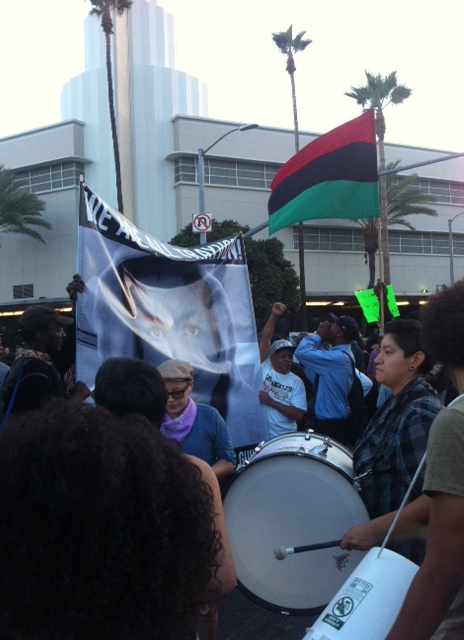
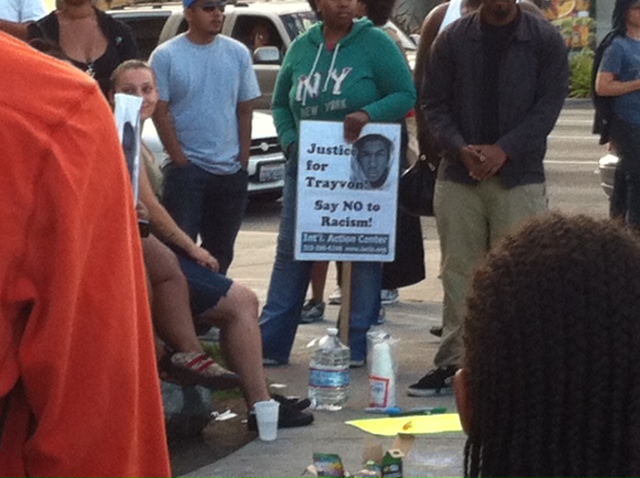
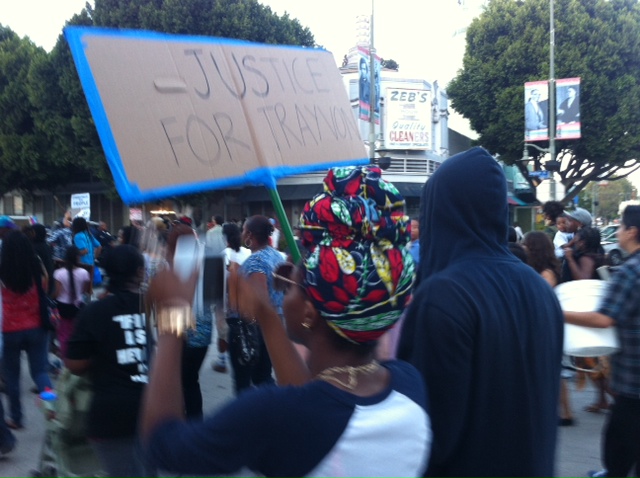
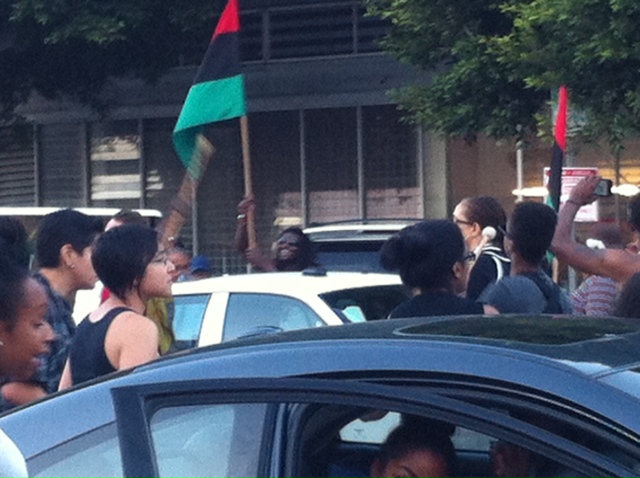
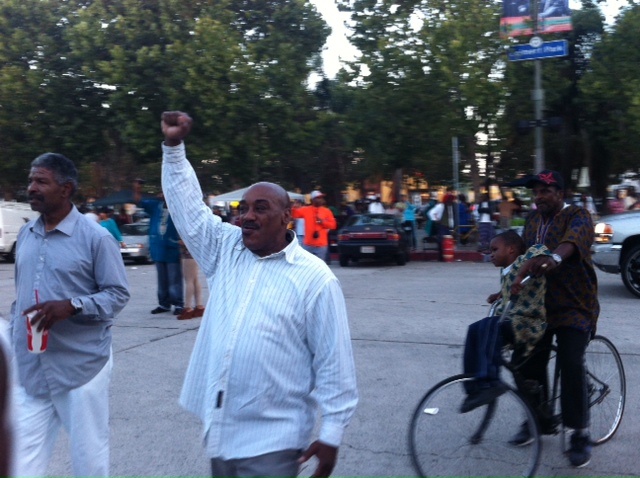
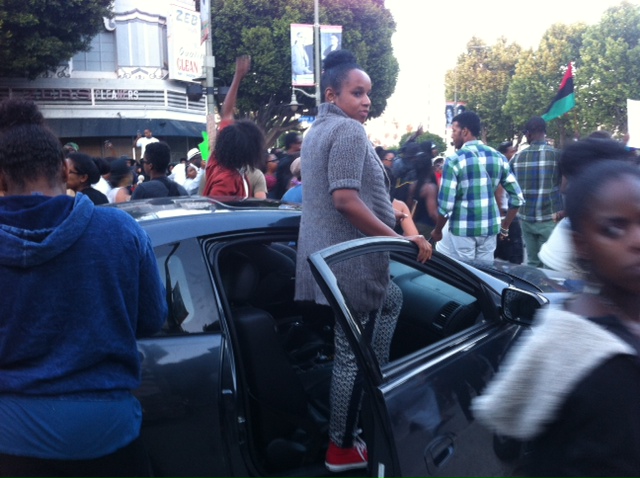
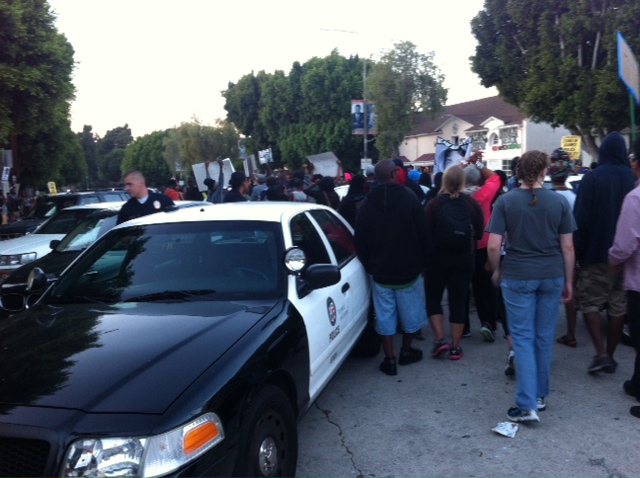
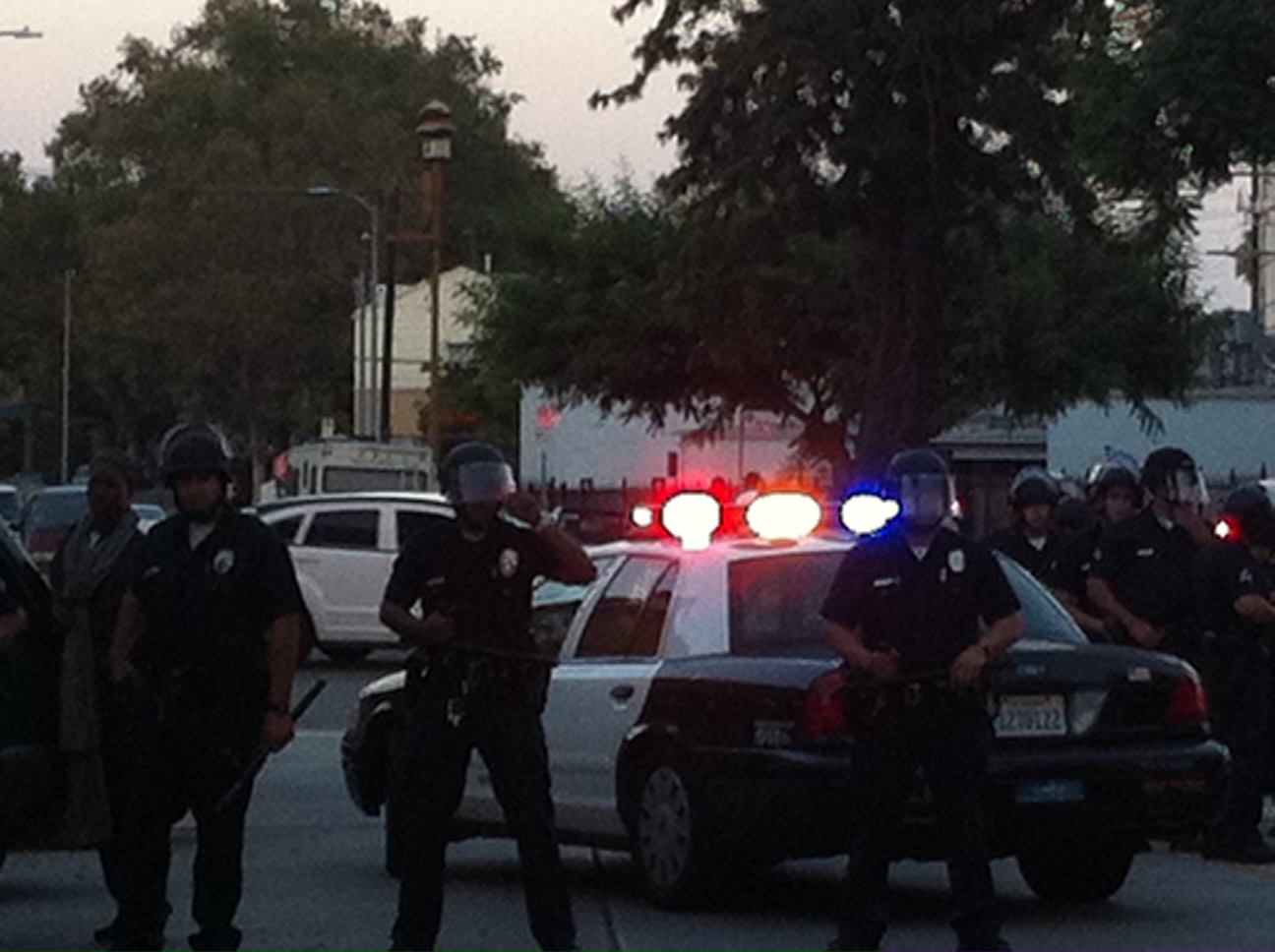
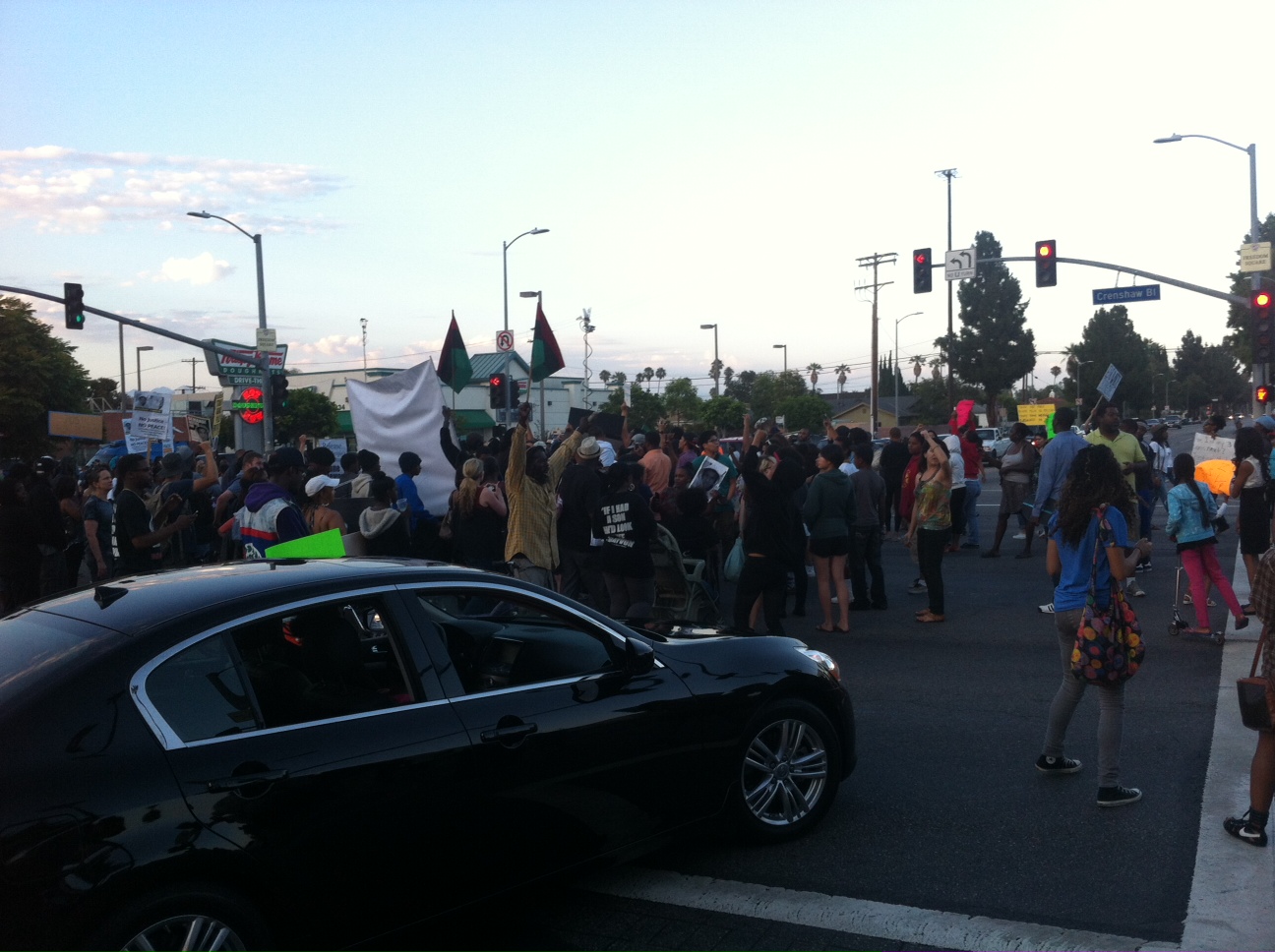
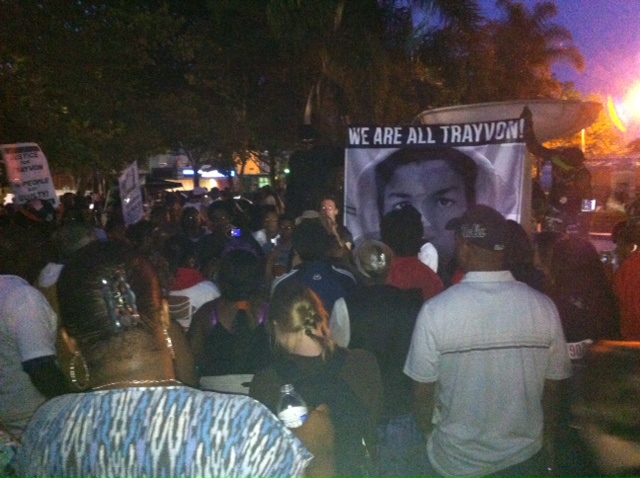

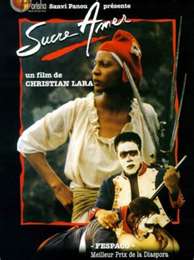


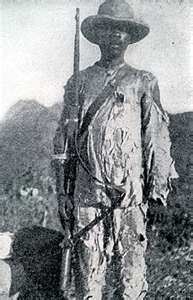
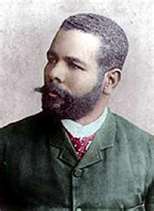

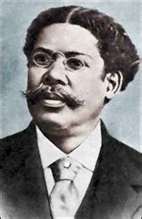
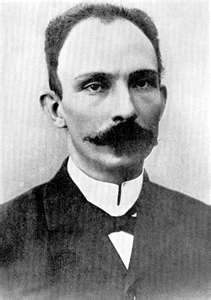
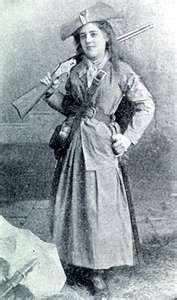
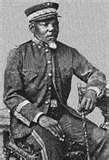
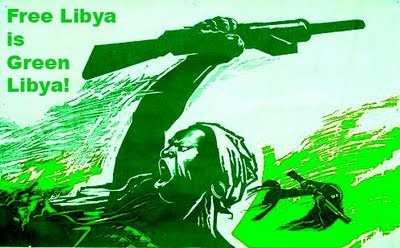


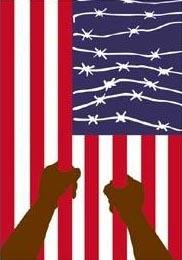
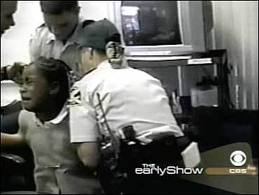
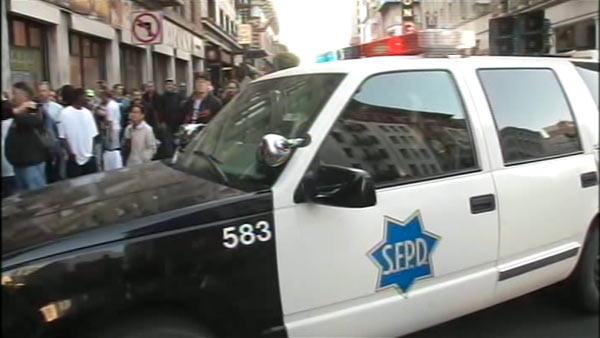
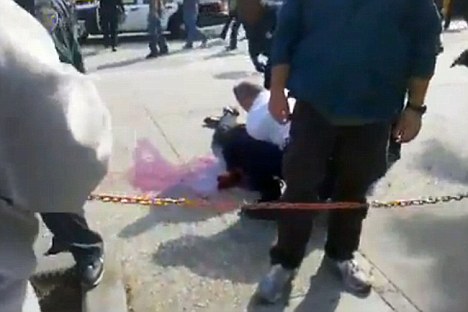

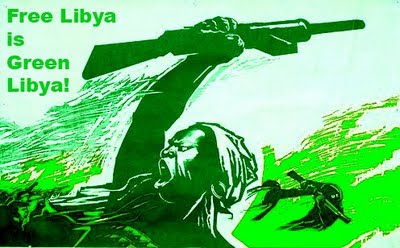


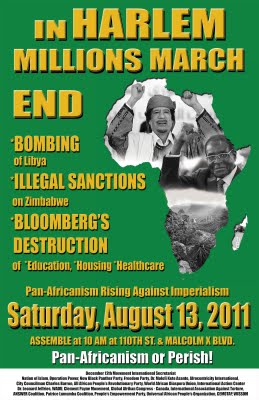
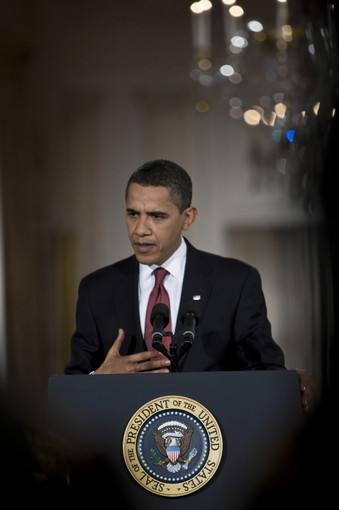
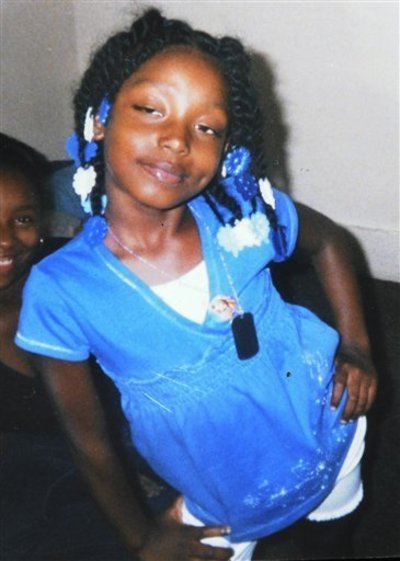
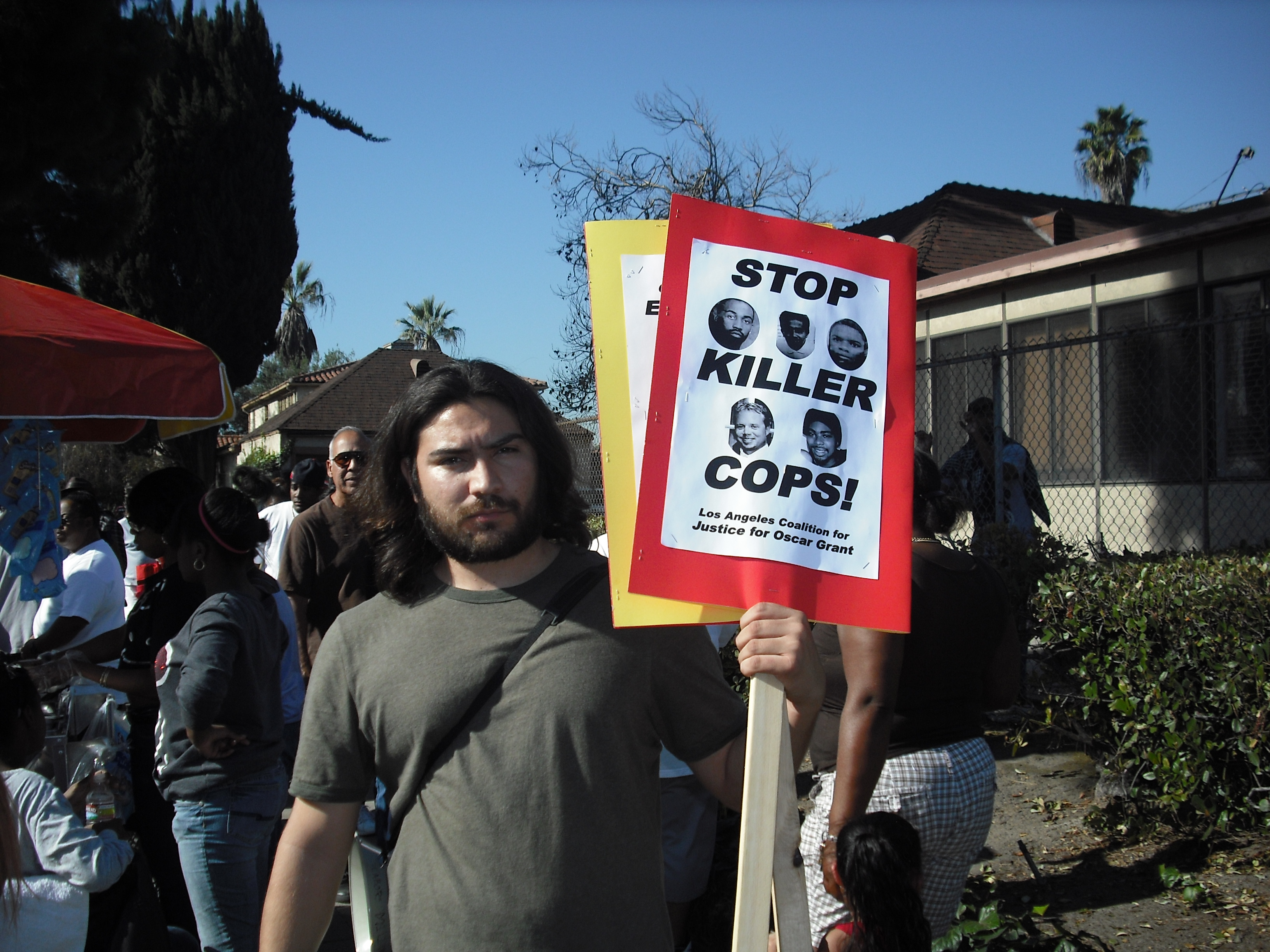
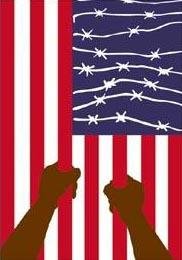
 Ignace's Weblog